
Creative Insights
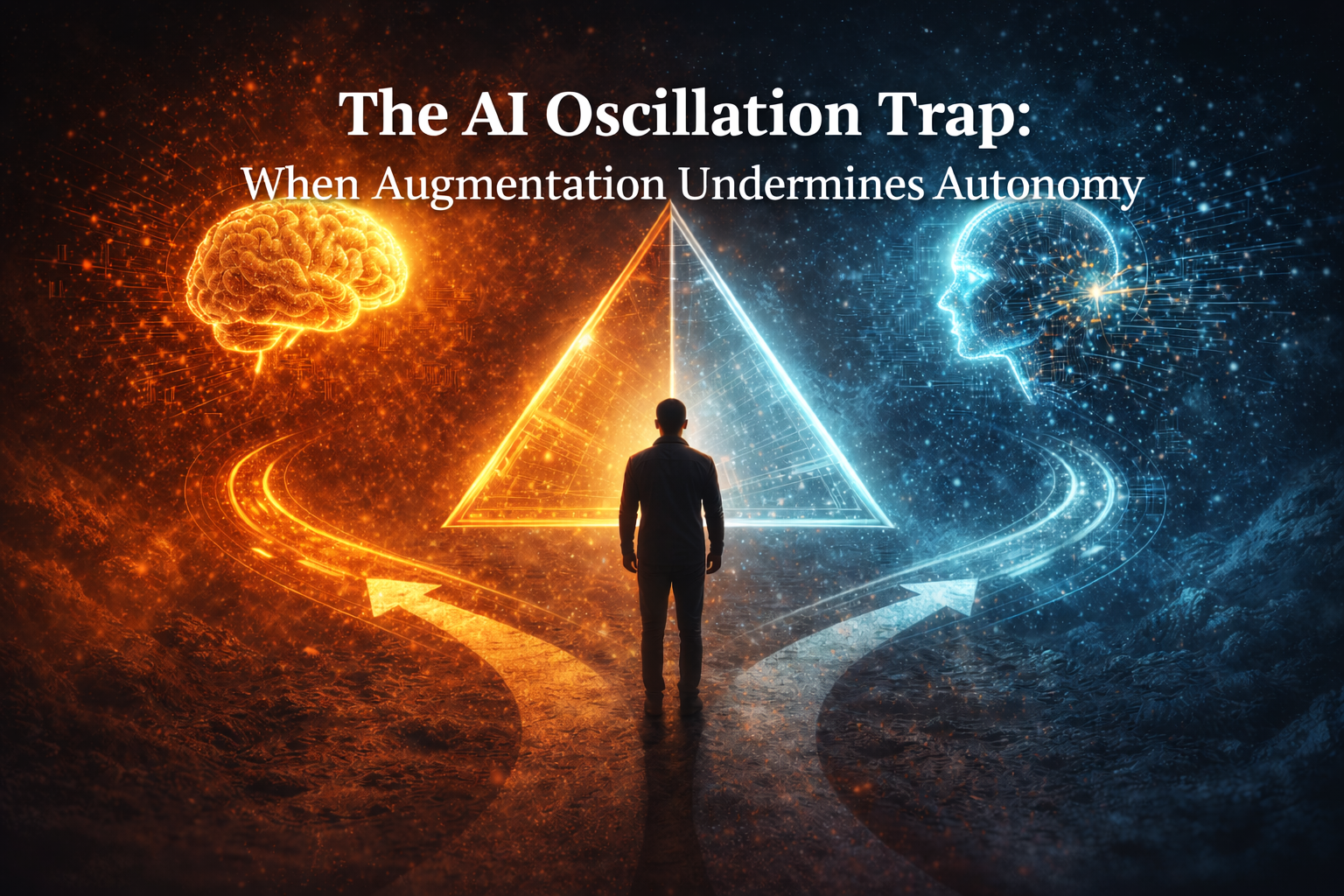
The AI Oscillation Trap: When Augmentation Undermines Autonomy
AI feels like help until it quietly starts reshaping how you think. Not because you “overuse” it, but because most people bounce between outsourcing and taking control back, over and over, without stable roles. That oscillation can erode confidence, weaken judgment in context, and make decision-making feel either heavier or strangely hollow. This post names the trap, explains why it happens even when you are using AI “well,” and gives a practical way to stabilize your division of labor so AI supports autonomy instead of undermining it.

When AI Sounds Right: Why Fluency Produces False Confidence
AI does not need to be wrong to mislead. It only needs to sound right.
Fluent, confident language triggers trust long before judgment has a chance to engage. This post examines why ease feels like accuracy, how fluency shortcuts human evaluation, and what it takes to maintain judgment when language arrives already resolved.
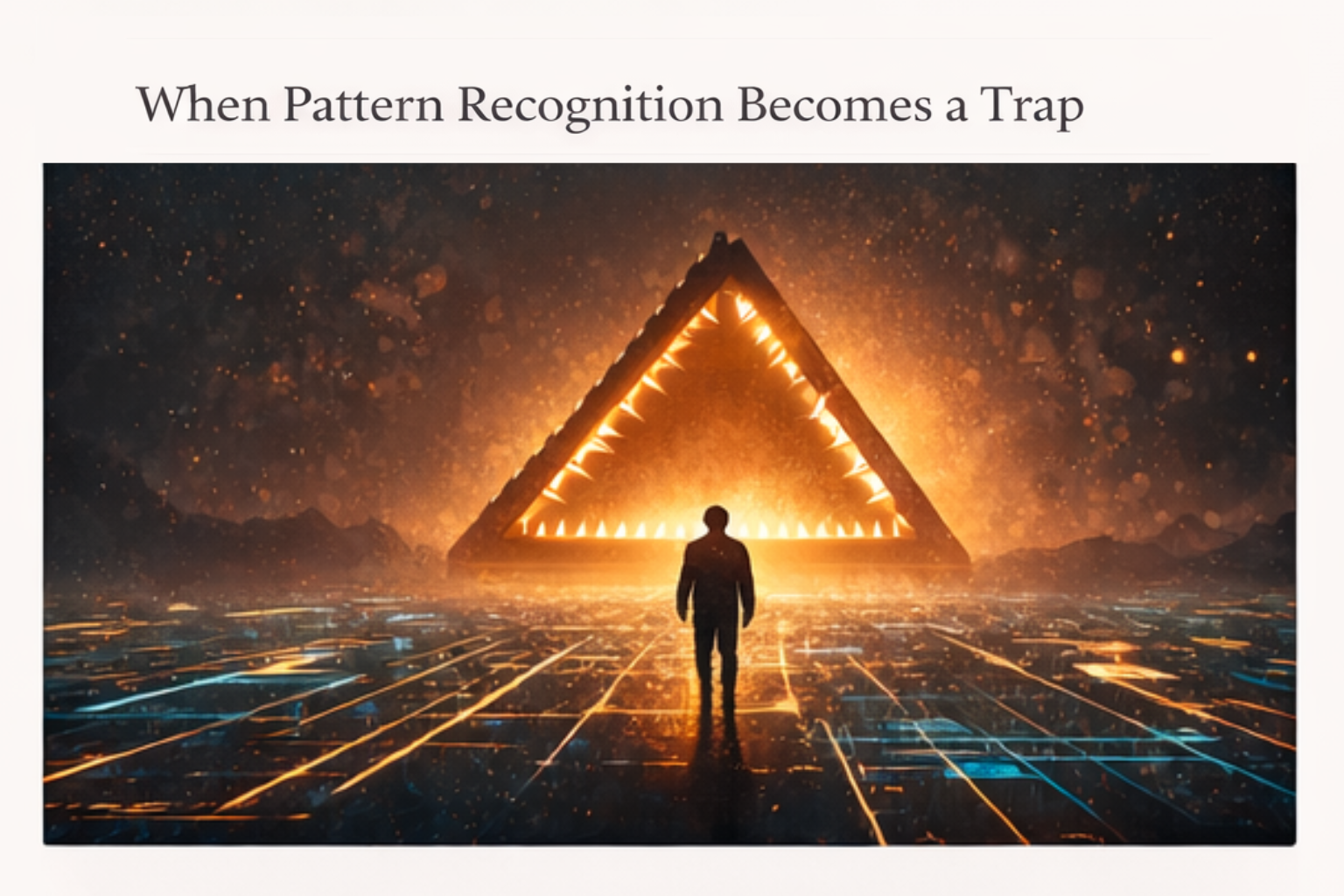
When Pattern Recognition Becomes a Trap
Pattern recognition can look like clarity, especially when language is fluent and confident. But coherence is not the same thing as understanding. When pattern-based systems are treated as sources of meaning rather than drafts for judgment, decisions begin to shortcut context, values, and consequences.
This becomes a trap in high-stakes environments where speed and polish are rewarded. Individuals receive plans that ignore capacity. Clinicians inherit frameworks that sound complete but bypass nuance. Organizations adopt systems that appear efficient while quietly increasing fragility under stress.
The problem is not the use of tools, but the substitution of judgment. Pattern recognition can assist thinking, but it cannot evaluate what matters, what conflicts, or what will break over time. When “sounds right” replaces discernment, the cost is often borne later—in burnout, ethical drift, and systems that fail precisely when they are needed most.
Is Telehealth Burning You Out?
If you want to make telehealth feel easier and more sustainable, I’d love to invite you to my free 15-minute webinar. It gives you simple ideas that immediately reduce telehealth fatigue and improve the online experience for you and your clients.
If you like the webinar, the Telehealth Connections Toolkit expands everything with scripts, accommodations, and ND-friendly adjustments you can start using right away. And if you ever want personalized support for your practice or team, that is where my consulting and coaching come in.