
Creative Insights
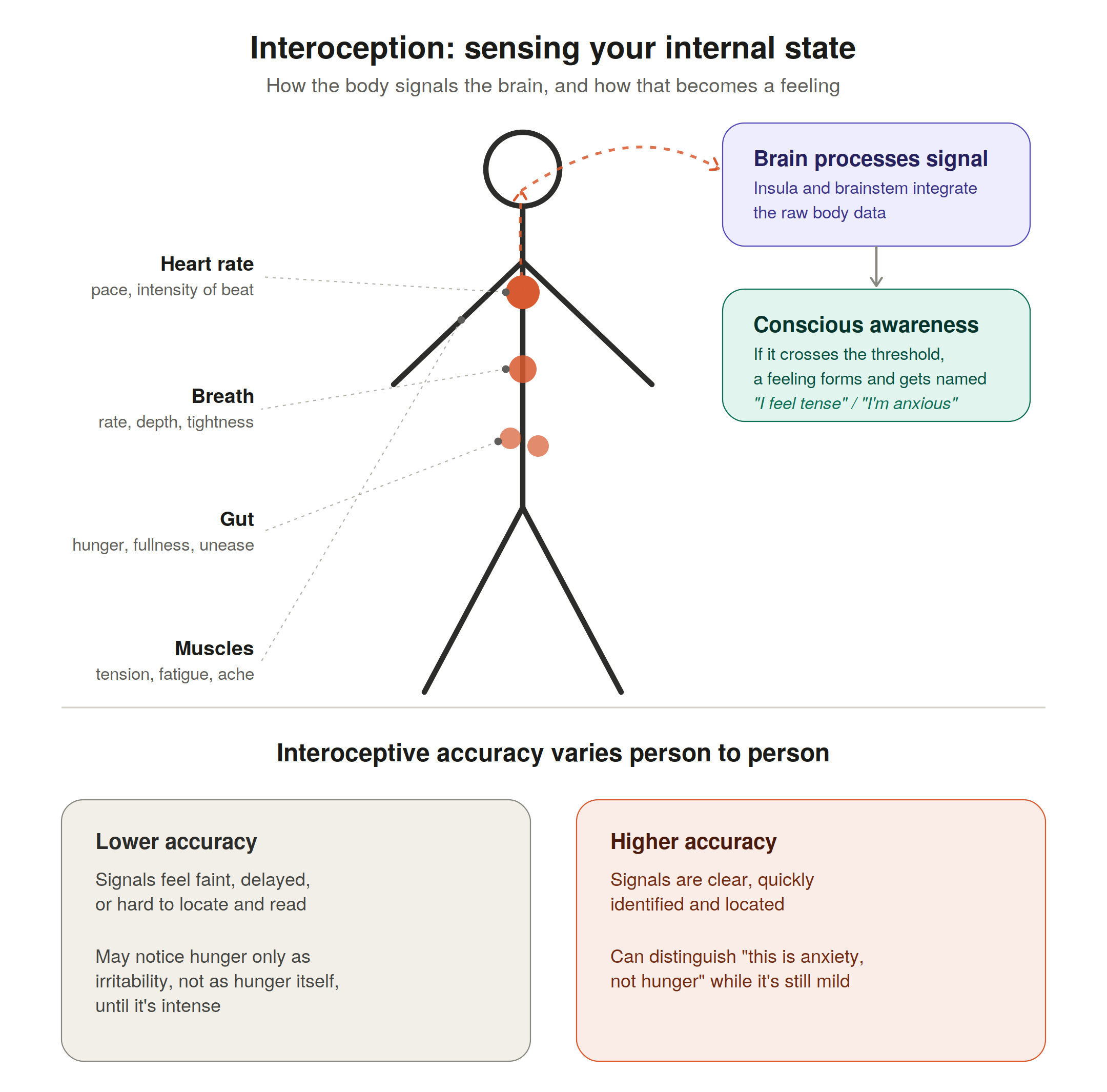
What Is Interoception?
You were taught about five senses in school. Sight, hearing, smell, taste, touch. Maybe you got a bonus lesson on proprioception, which is the sense of where your body is in space, like knowing your arm is raised even when your eyes are closed. And maybe, if you were lucky, someone mentioned vestibular sense, which is balance and movement through space. But interoception? Almost nobody learns about interoception in school. And it might be the most important one.
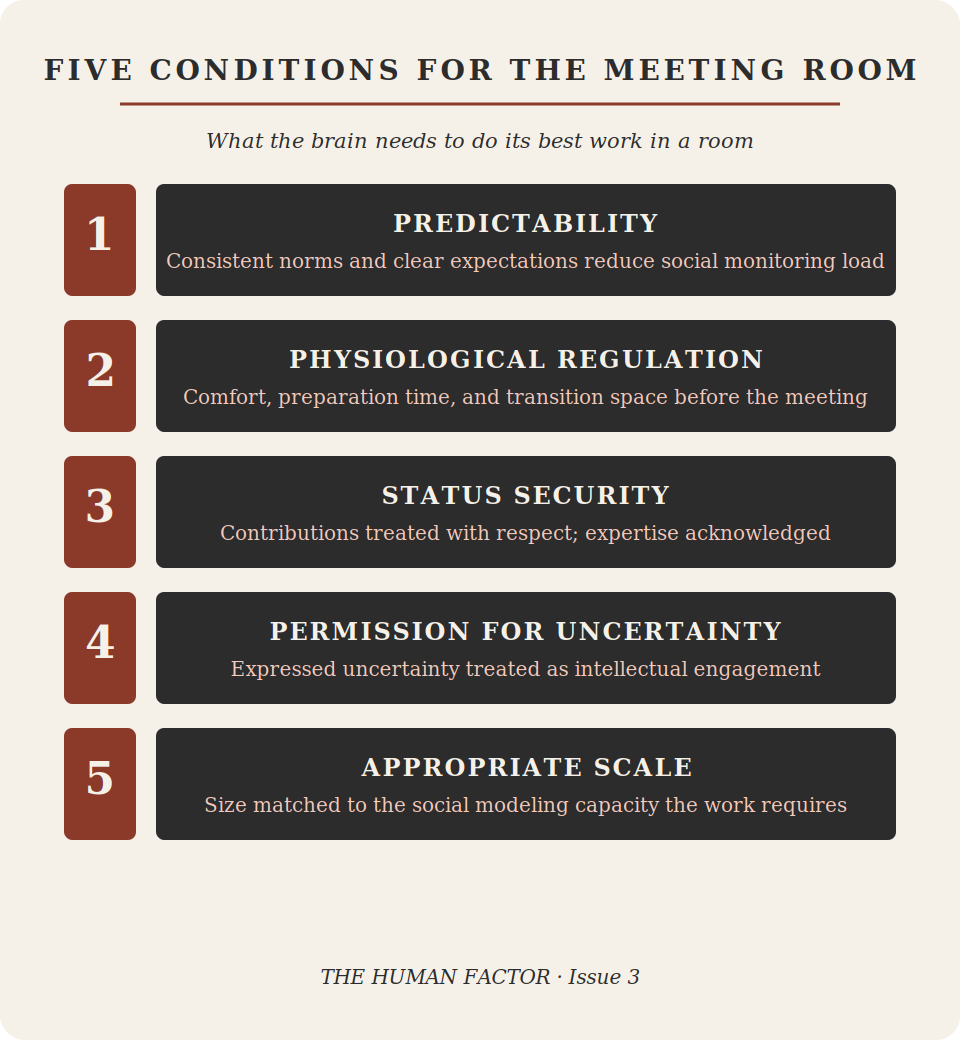
The Meeting Room as Neurological Environment
Before the first agenda item is introduced, the meeting has already begun, at a level considerably below conscious awareness.
The brain enters a room the way it enters any social environment: in a state of active assessment. Who is here. Where they sit. How they hold themselves. Who looks at whom and for how long. What the emotional temperature is. Where the power lives. This assessment runs automatically, in milliseconds, drawing on neural systems that predate language by hundreds of millions of years. By the time someone says good morning, the social brain has already generated a working model of the room.
A meeting is one of the most neurologically demanding environments the modern workplace produces. It concentrates, in a single space and time window, the specific combination of inputs the social brain is most sensitive to: live status dynamics, real-time performance evaluation, simultaneous prediction across multiple people, and meaningful consequences attached to how things go. The brain takes all of this seriously. It allocates resources accordingly.
Understanding what the brain is doing in that room, mechanistically and specifically, changes how leaders design meetings, how managers read their teams, and how individuals understand their own behavior in group settings. The neuroscience of the meeting room is the neuroscience of human social cognition under conditions that matter.
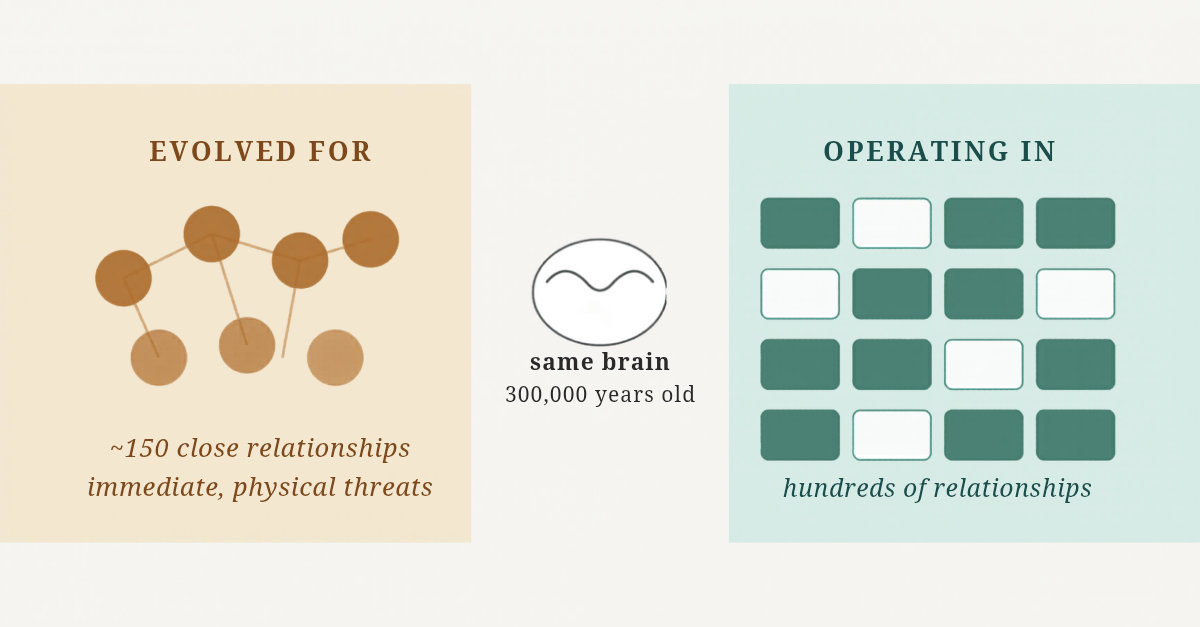
Your Brain Was Not Built for This
Sometime around 300,000 years ago, give or take, the brain you are using to read this sentence finished its last major hardware update. What you have in your skull right now — the roughly three-pound organ responsible for your quarterly targets, your Slack hygiene, your inability to stop checking your phone during meetings, your best ideas, your worst decisions, and your persistent sense that something is slightly wrong — is the same basic architecture that helped your ancestors track prey across open savanna, navigate complex social hierarchies around a fire, and survive in environments that were actively trying to kill them.
The AI Oscillation Trap: When Augmentation Undermines Autonomy
AI feels like help until it quietly starts reshaping how you think. Not because you “overuse” it, but because most people bounce between outsourcing and taking control back, over and over, without stable roles. That oscillation can erode confidence, weaken judgment in context, and make decision-making feel either heavier or strangely hollow. This post names the trap, explains why it happens even when you are using AI “well,” and gives a practical way to stabilize your division of labor so AI supports autonomy instead of undermining it.
When AI Sounds Right: Why Fluency Produces False Confidence
AI does not need to be wrong to mislead. It only needs to sound right.
Fluent, confident language triggers trust long before judgment has a chance to engage. This post examines why ease feels like accuracy, how fluency shortcuts human evaluation, and what it takes to maintain judgment when language arrives already resolved.
When Pattern Recognition Becomes a Trap
Pattern recognition can look like clarity, especially when language is fluent and confident. But coherence is not the same thing as understanding. When pattern-based systems are treated as sources of meaning rather than drafts for judgment, decisions begin to shortcut context, values, and consequences.
This becomes a trap in high-stakes environments where speed and polish are rewarded. Individuals receive plans that ignore capacity. Clinicians inherit frameworks that sound complete but bypass nuance. Organizations adopt systems that appear efficient while quietly increasing fragility under stress.
The problem is not the use of tools, but the substitution of judgment. Pattern recognition can assist thinking, but it cannot evaluate what matters, what conflicts, or what will break over time. When “sounds right” replaces discernment, the cost is often borne later—in burnout, ethical drift, and systems that fail precisely when they are needed most.