Sale Price:
$4.99
Original Price:
$9.99
The NSD Capacity Planner is a self-directed planning tool built for brains that don't run on consistency.
It starts with one number, 0 to 10. That number decides what you do today, not whether you're allowed to show up. Every page in the planner scales to it: the floor task, the schedule, the review, the tools. When capacity is low, the planner gets smaller. When it's high, there's room to move. The structure follows the person, not the other way around.
The daily pages run Monday through Sunday and include a capacity check, a floor task, a schedule, a capture strip, and an end-of-day close. The weekly review sits behind them. Behind that is a full library of print-on-demand tools covering executive function, demand avoidance, recovery, self-advocacy, sensory profiling, crisis planning, habit tracking, and more. You print what fits this cycle. You leave the rest.
The planner is grounded in the Neurocontextual Systems Design (NSD) Framework, a methodology that uses physiological and neurological response patterns as a diagnostic lens. NSD looks at capacity, context, and friction, and it builds from there.
This is not a productivity system. It is not a habit streak. It is not asking you to do more. It is a tool for people who need their planning infrastructure to account for the fact that yesterday's capacity is not a promise about today's, and that a blank page on a hard day is data, not failure.
Use what fits. Skip what doesn't. Cross out anything that doesn't apply and write in what does. That's the whole model.
The NSD Capacity Planner is a self-directed planning tool built for brains that don't run on consistency.
It starts with one number, 0 to 10. That number decides what you do today, not whether you're allowed to show up. Every page in the planner scales to it: the floor task, the schedule, the review, the tools. When capacity is low, the planner gets smaller. When it's high, there's room to move. The structure follows the person, not the other way around.
The daily pages run Monday through Sunday and include a capacity check, a floor task, a schedule, a capture strip, and an end-of-day close. The weekly review sits behind them. Behind that is a full library of print-on-demand tools covering executive function, demand avoidance, recovery, self-advocacy, sensory profiling, crisis planning, habit tracking, and more. You print what fits this cycle. You leave the rest.
The planner is grounded in the Neurocontextual Systems Design (NSD) Framework, a methodology that uses physiological and neurological response patterns as a diagnostic lens. NSD looks at capacity, context, and friction, and it builds from there.
This is not a productivity system. It is not a habit streak. It is not asking you to do more. It is a tool for people who need their planning infrastructure to account for the fact that yesterday's capacity is not a promise about today's, and that a blank page on a hard day is data, not failure.
Use what fits. Skip what doesn't. Cross out anything that doesn't apply and write in what does. That's the whole model.

 Image 1 of 13
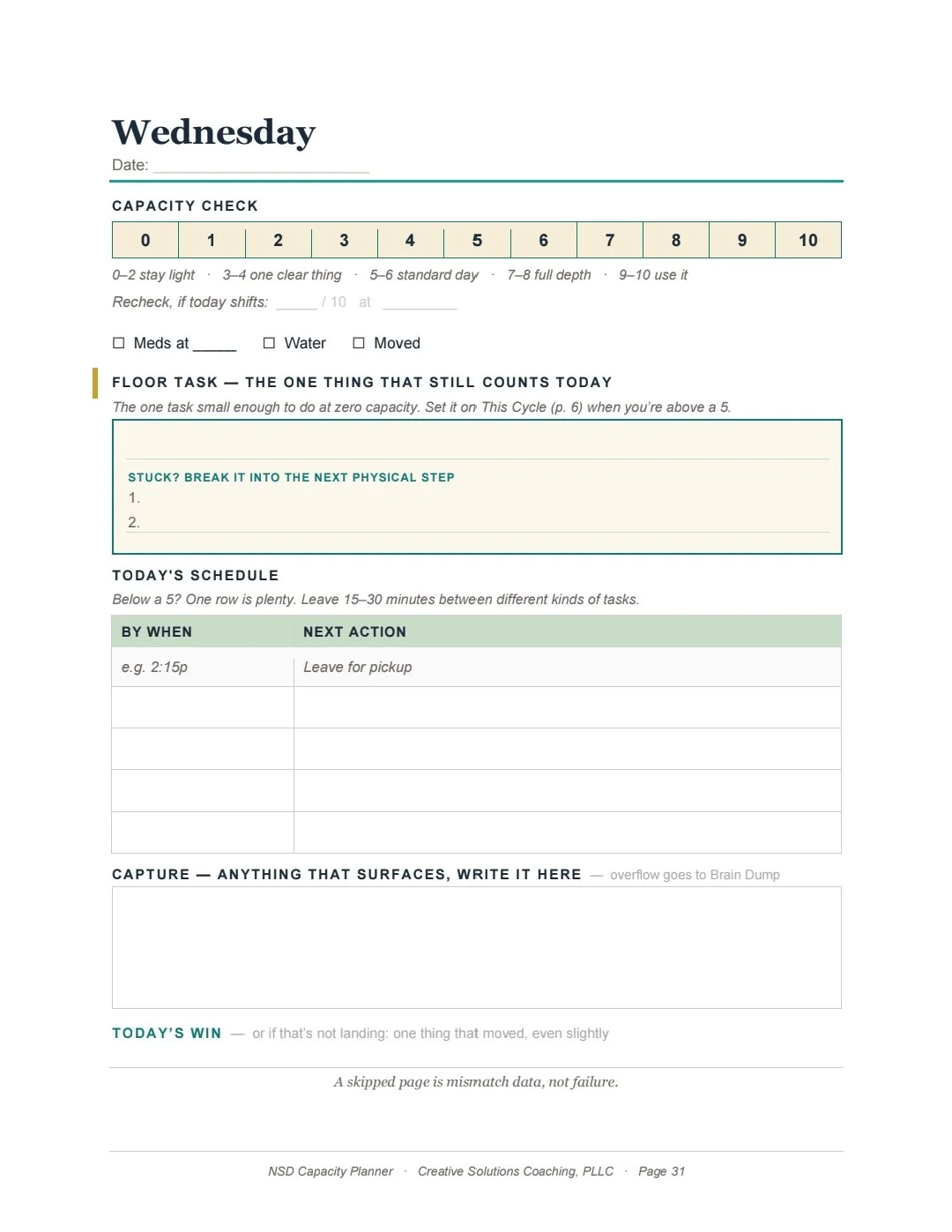 Image 2 of 13
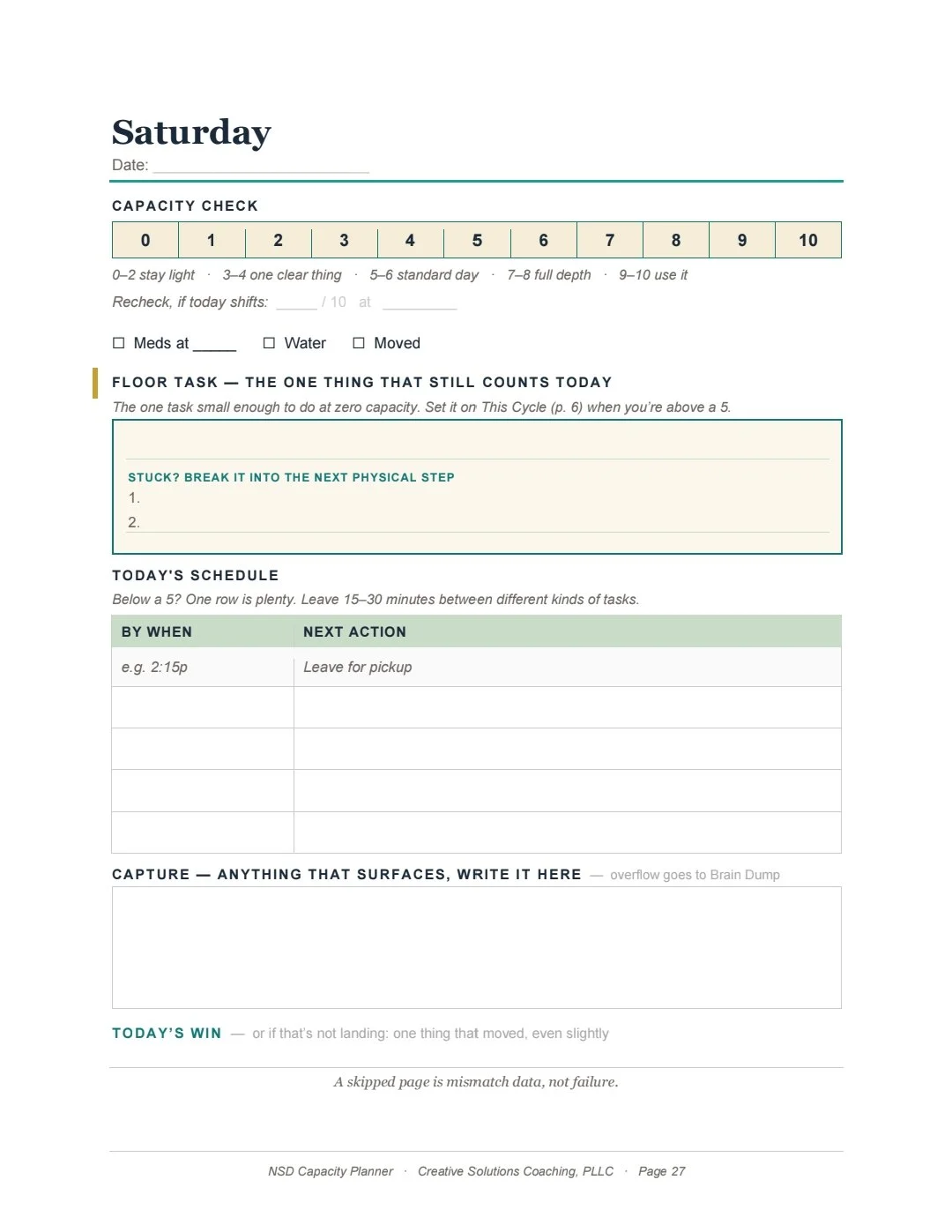 Image 3 of 13
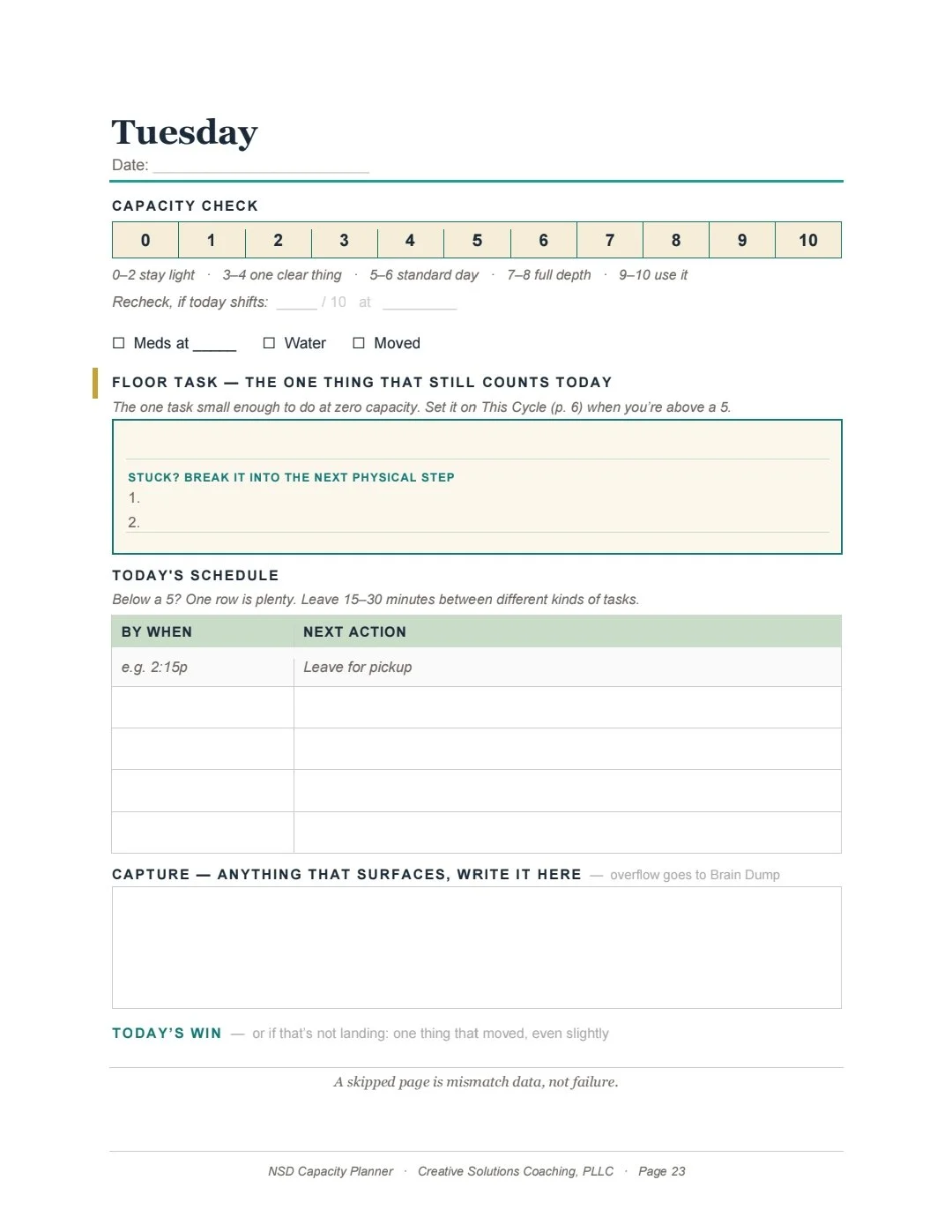 Image 4 of 13
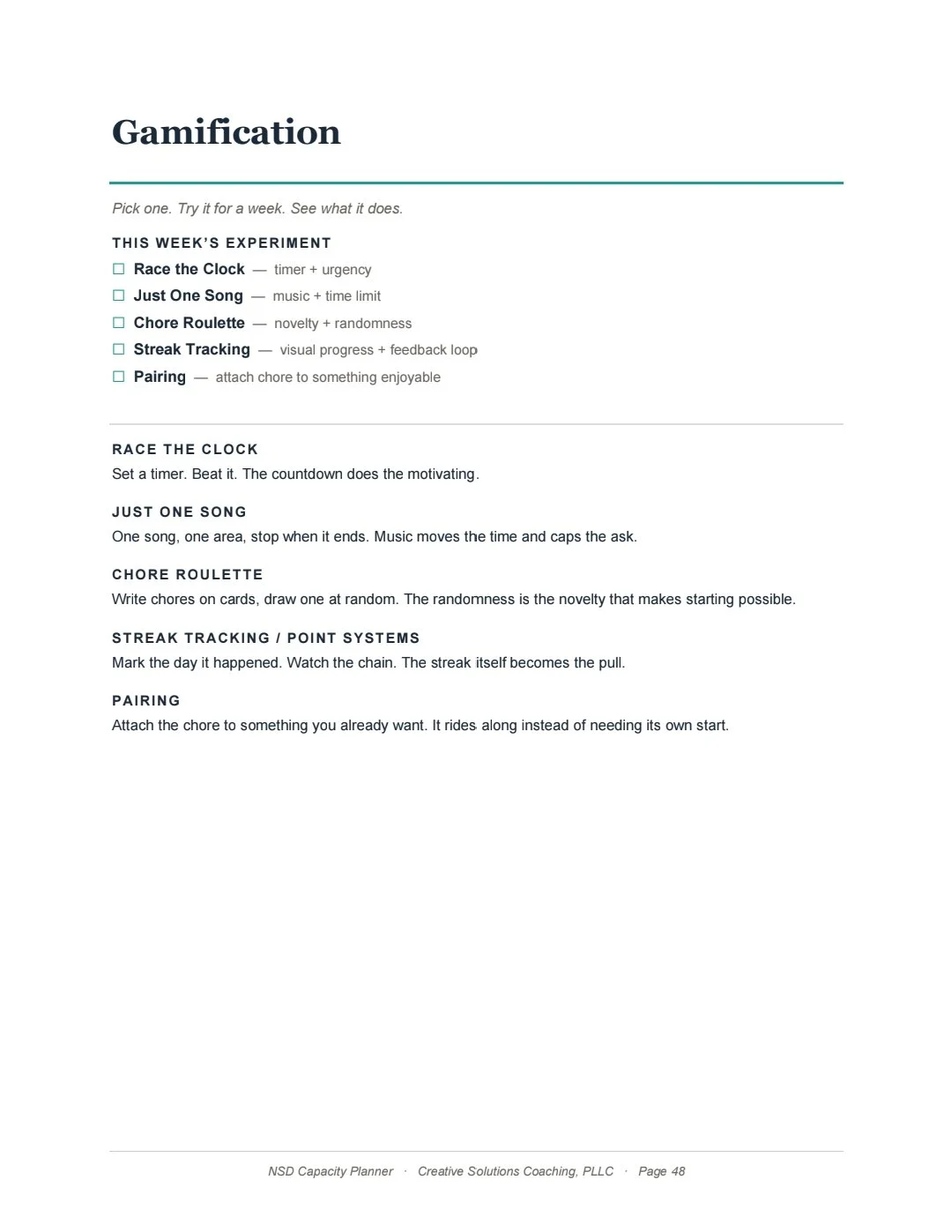 Image 5 of 13
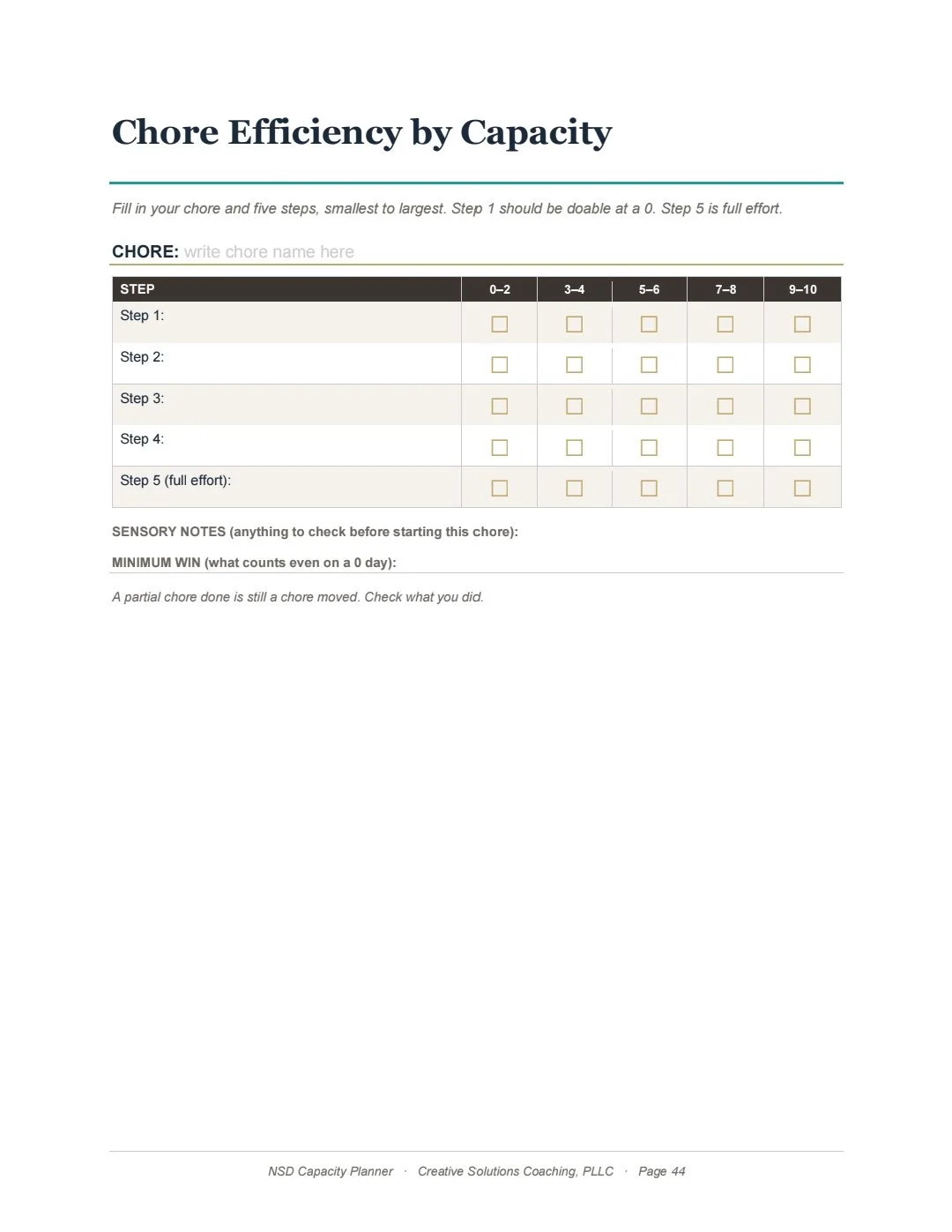 Image 6 of 13
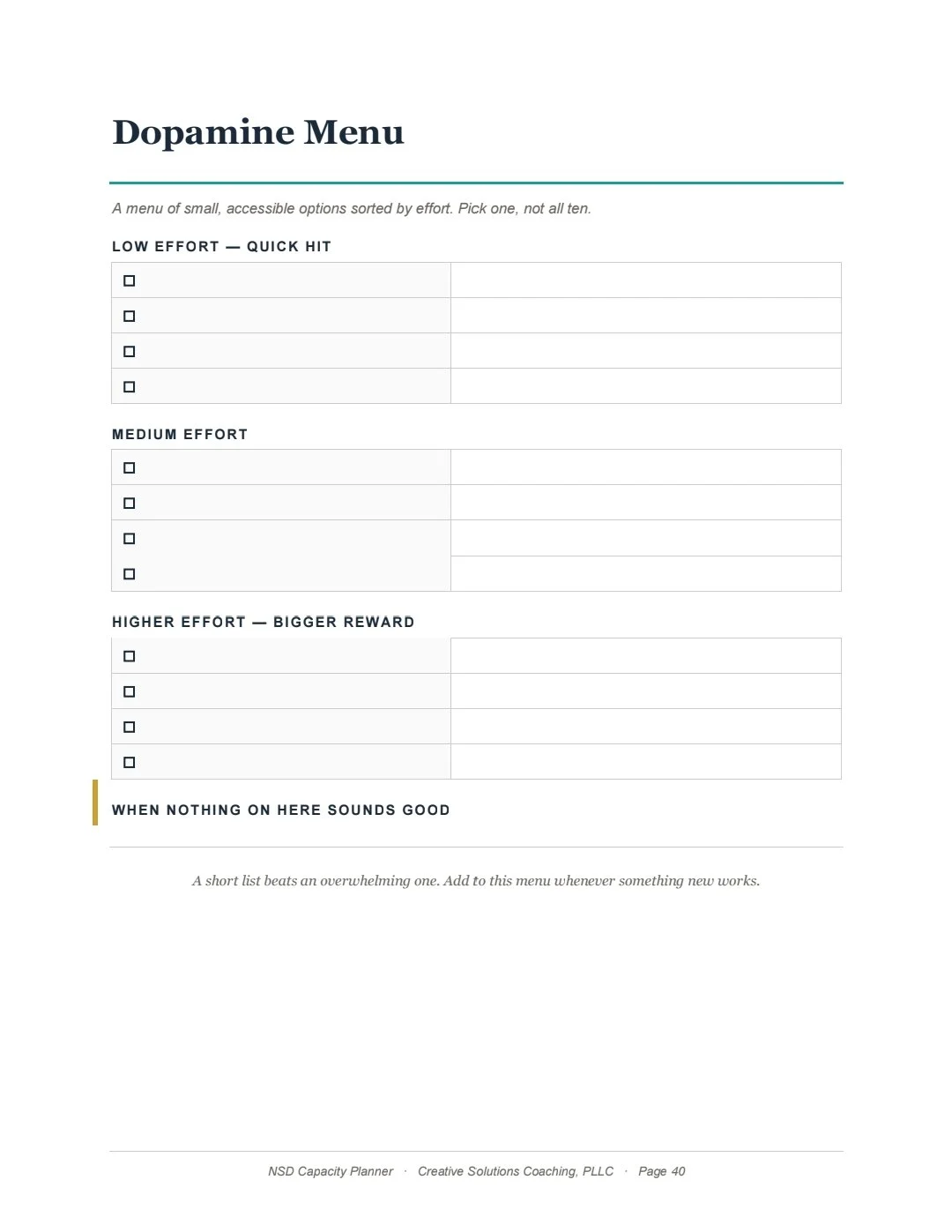 Image 7 of 13
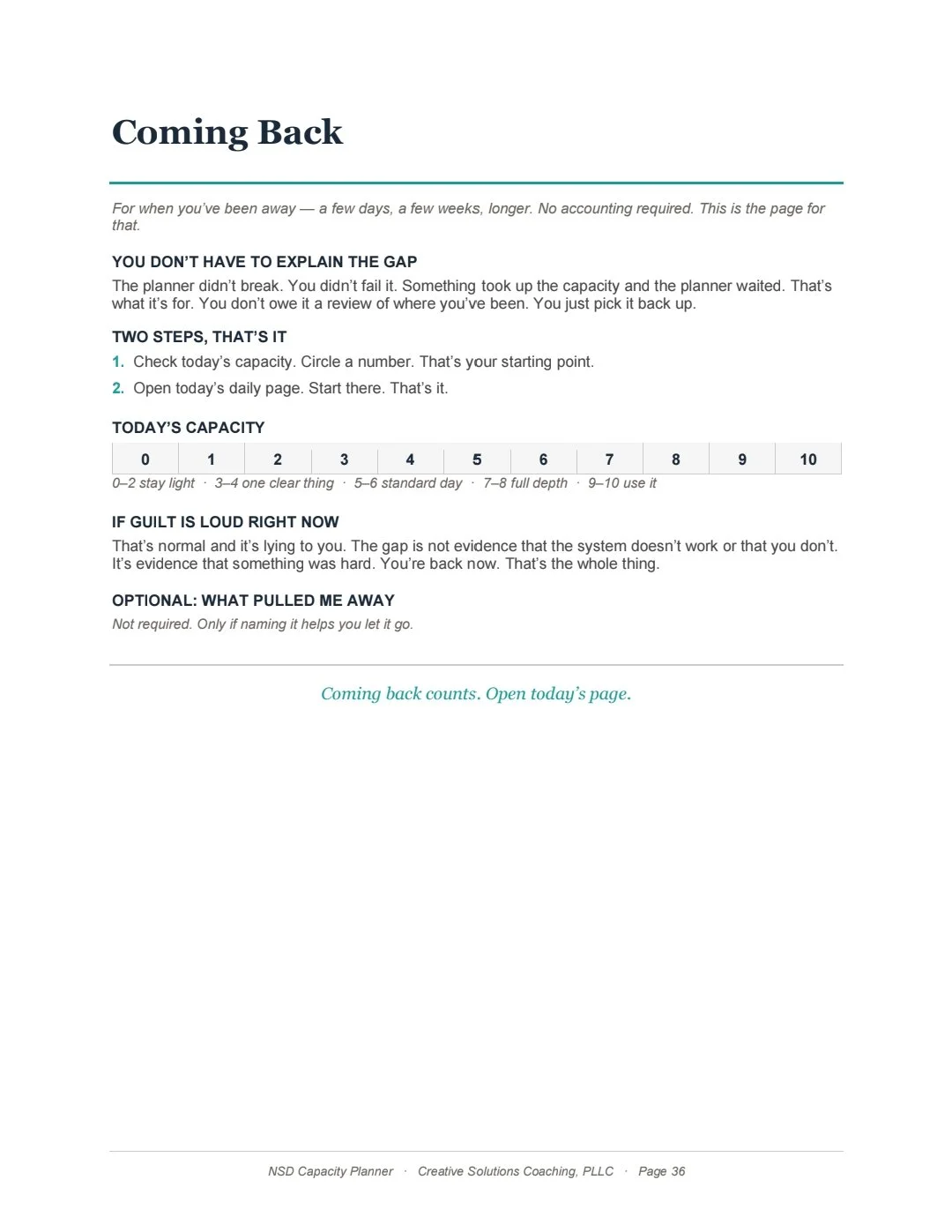 Image 8 of 13
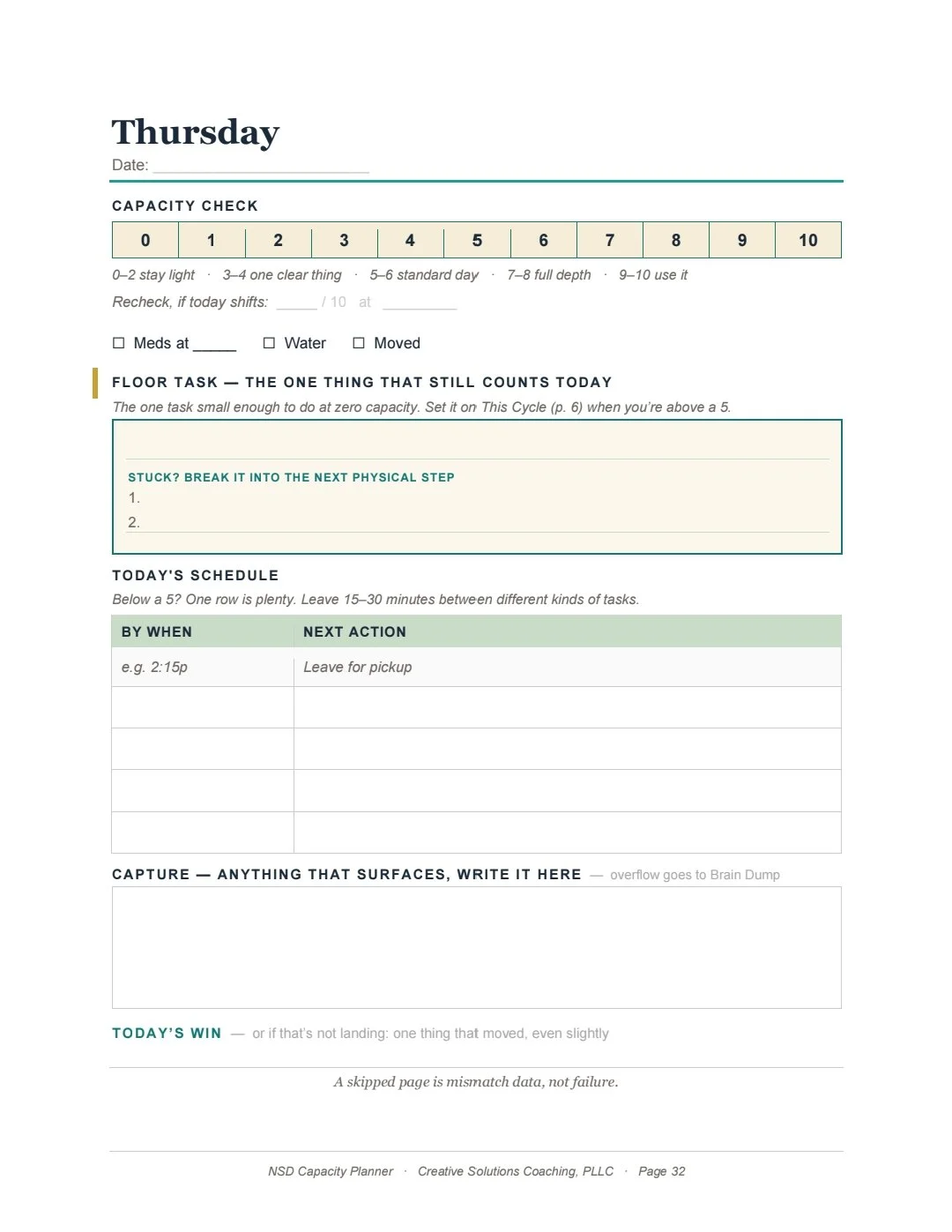 Image 9 of 13
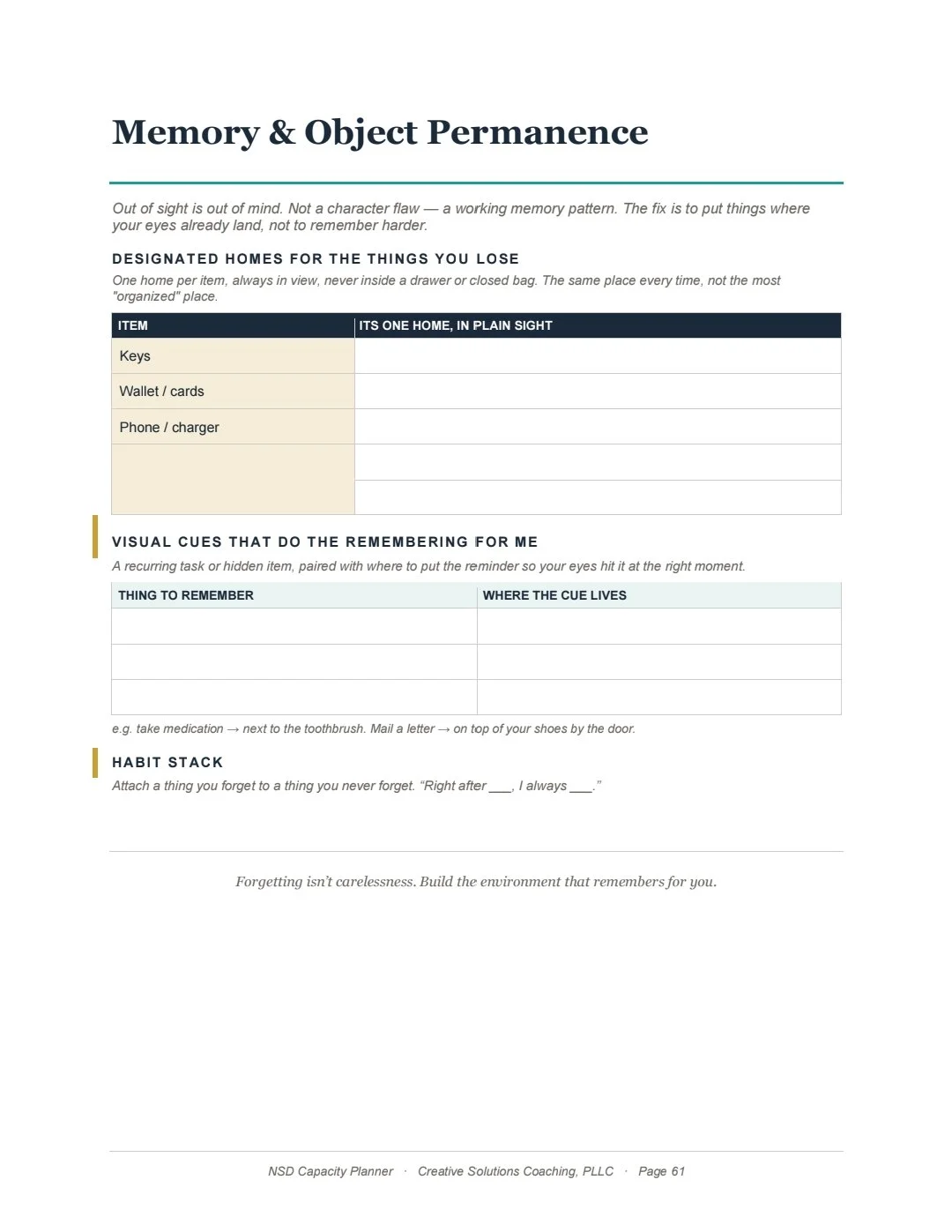 Image 10 of 13
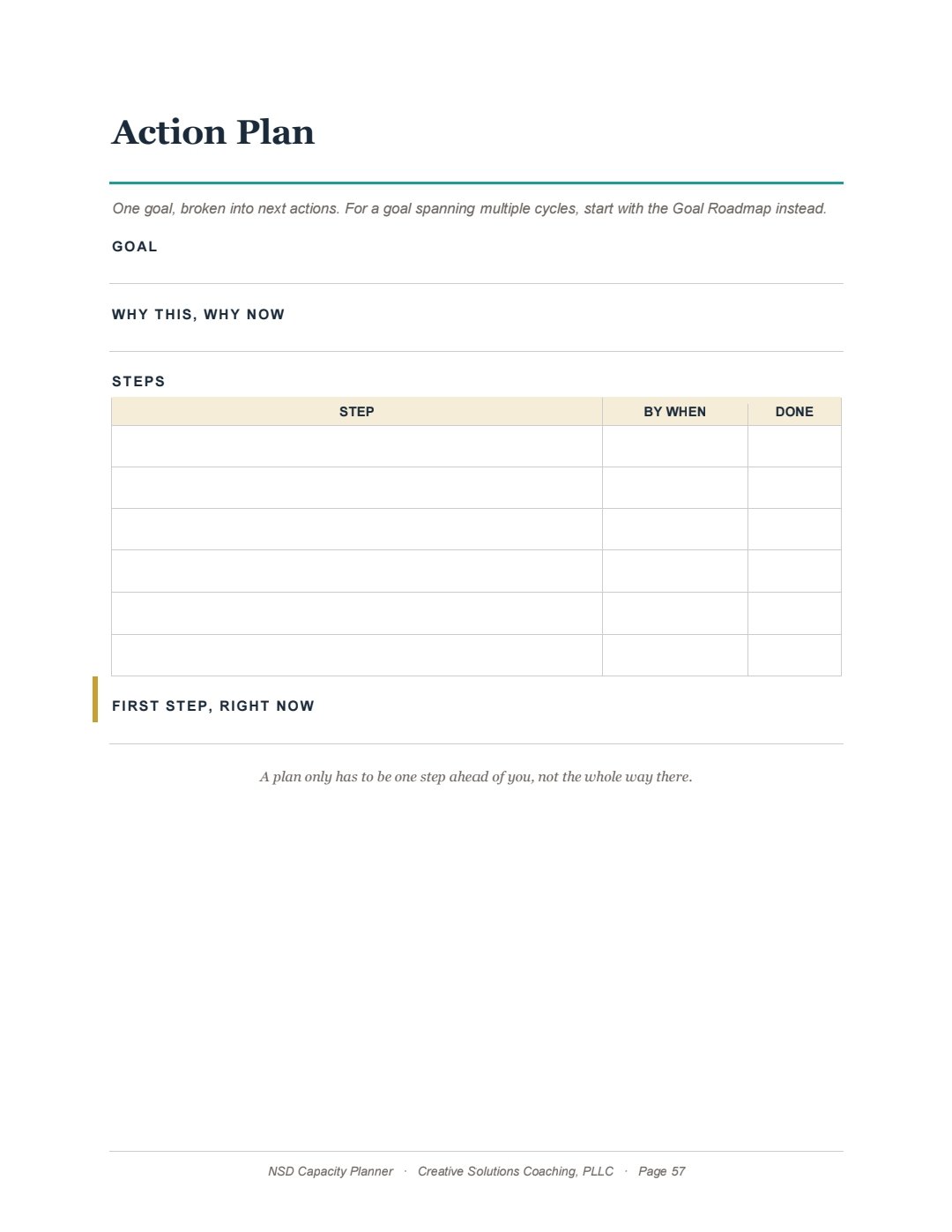 Image 11 of 13
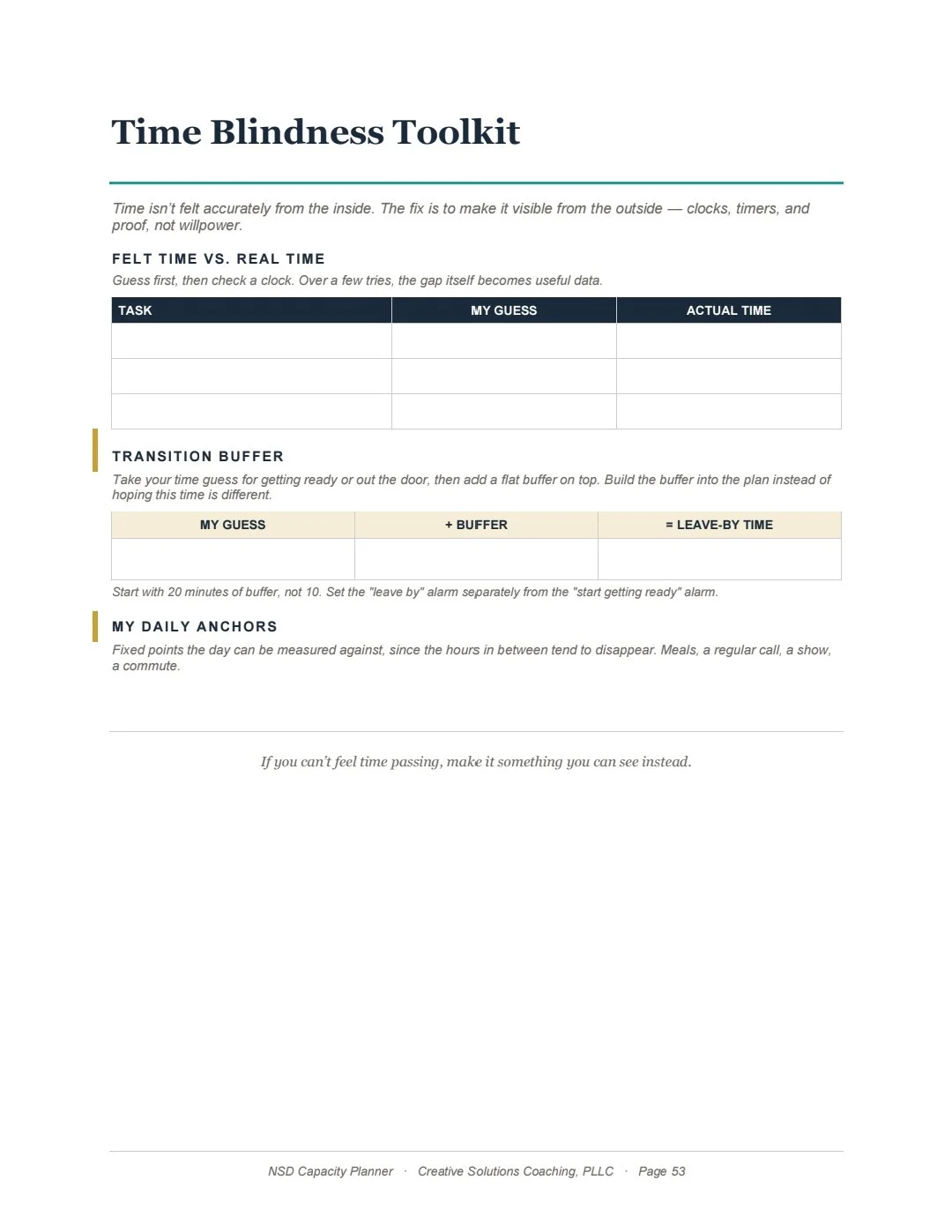 Image 12 of 13
 Image 13 of 13