Alexithymia Handbook: NSDS Interactive
Sale Price: $28.00 Original Price: $60.00

Alexithymia is common, frequently missed, and almost never addressed with dedicated clinical tools. The Alexithymia Handbook changes that. Fourteen structured sections guide clients from understanding interoception through naming emotions, identifying triggers, logging body sensations, and building reflective practice — with full clinician delivery options built in.

What's inside:

14 sections · Emotions Wheel with live radar chart (6 core emotions, 70+ sub-emotions ordered mild to intense) · Trigger Identification worksheet · Emotional Reflection worksheet · Body Scan with interactive body figure and pressure point logging · Check-In Tracker · 5 journaling sections (Daily Awareness, Body–Emotion Journal, Emotion Labeling, Expression Practice, Coping Journal) · Weekly Reflection prompts · Body-Awareness Meditation with animated breathing circle · In-Session mode · Remote/Async mode with PIN-encrypted client delivery · Personal mode with auto-save · Print summaries · Full accessibility support

How it works:

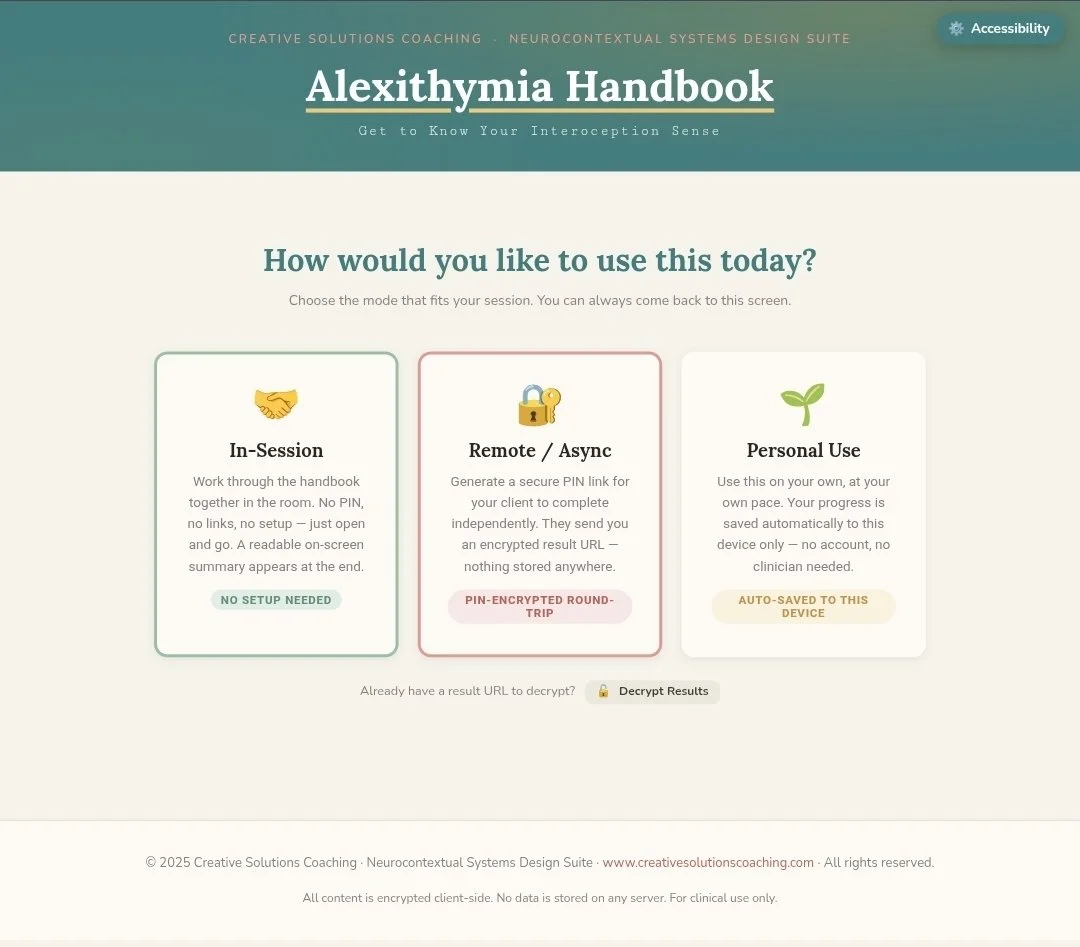
After purchase you'll download a single file. Open it in any browser. Choose your mode — In-Session, Remote/Async, or Personal. In remote mode, generate an encrypted PIN link for your client; they complete the handbook independently and return an encrypted result URL that only you can decrypt with your PIN. No data stored anywhere. No server. PHI-safe by design.

One-time purchase · Instant download

Not a diagnostic instrument. Licensed for individual clinical and educational use.

Alexithymia is common, frequently missed, and almost never addressed with dedicated clinical tools. The Alexithymia Handbook changes that. Fourteen structured sections guide clients from understanding interoception through naming emotions, identifying triggers, logging body sensations, and building reflective practice — with full clinician delivery options built in.

What's inside:

14 sections · Emotions Wheel with live radar chart (6 core emotions, 70+ sub-emotions ordered mild to intense) · Trigger Identification worksheet · Emotional Reflection worksheet · Body Scan with interactive body figure and pressure point logging · Check-In Tracker · 5 journaling sections (Daily Awareness, Body–Emotion Journal, Emotion Labeling, Expression Practice, Coping Journal) · Weekly Reflection prompts · Body-Awareness Meditation with animated breathing circle · In-Session mode · Remote/Async mode with PIN-encrypted client delivery · Personal mode with auto-save · Print summaries · Full accessibility support

How it works:

After purchase you'll download a single file. Open it in any browser. Choose your mode — In-Session, Remote/Async, or Personal. In remote mode, generate an encrypted PIN link for your client; they complete the handbook independently and return an encrypted result URL that only you can decrypt with your PIN. No data stored anywhere. No server. PHI-safe by design.

One-time purchase · Instant download

Not a diagnostic instrument. Licensed for individual clinical and educational use.

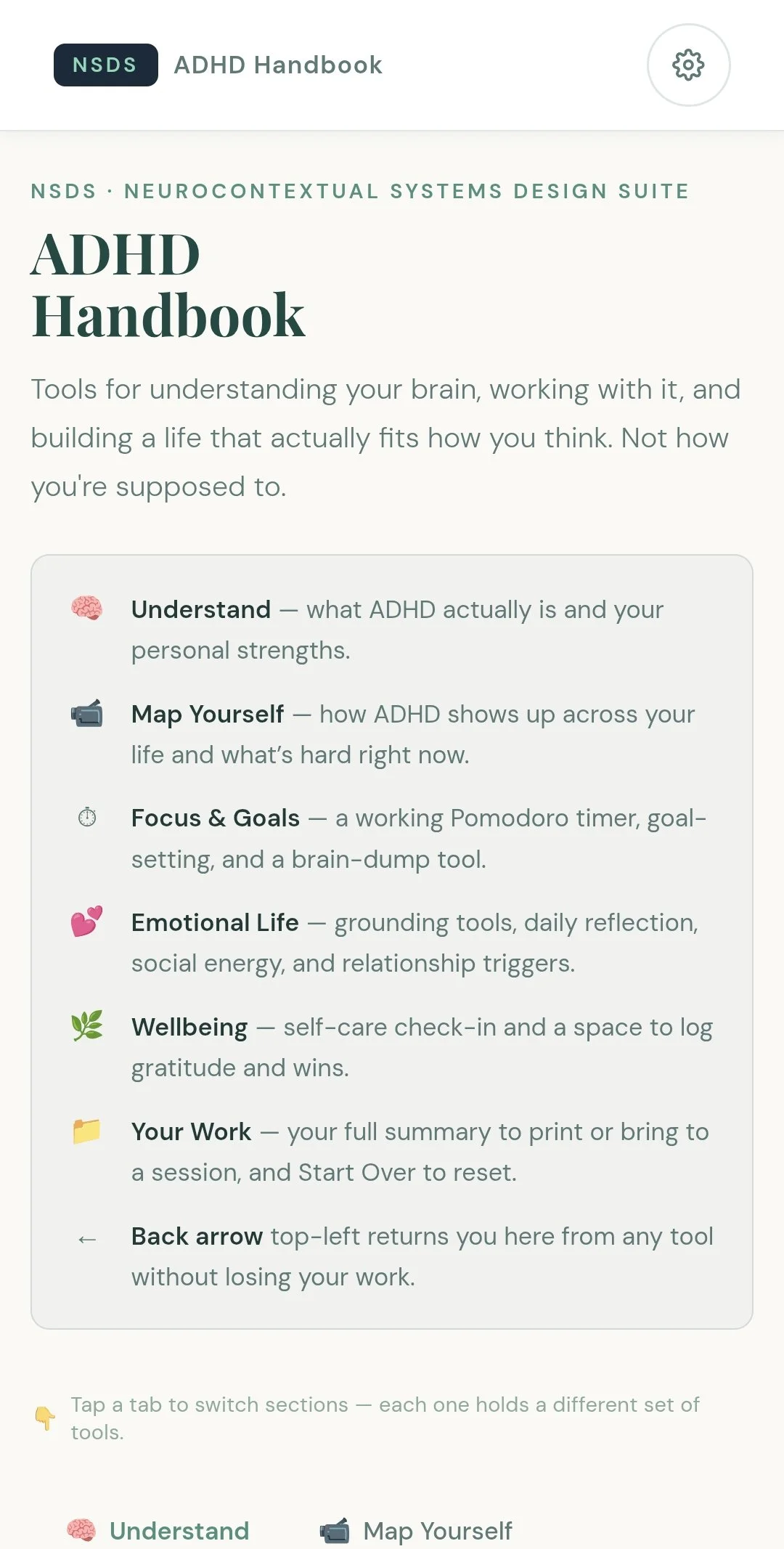
ADHD Handbook: NSDS Interactive
Sale Price: $28.00 Original Price: $60.00
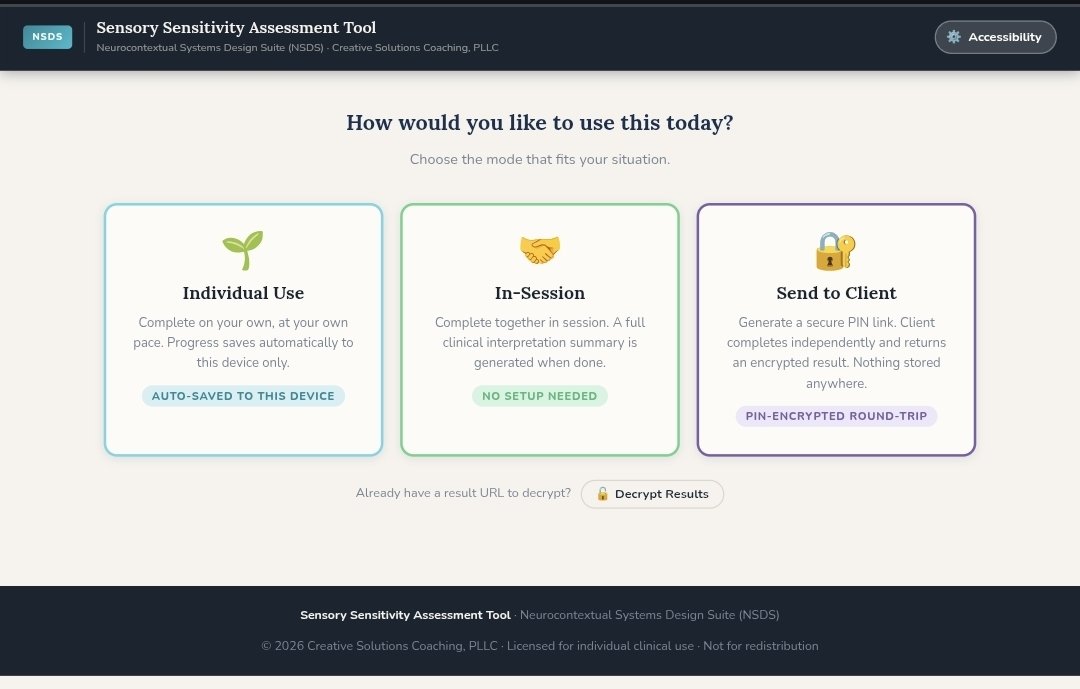
Sensory Sensitivity Assessment Tool — Interactive Digital Download
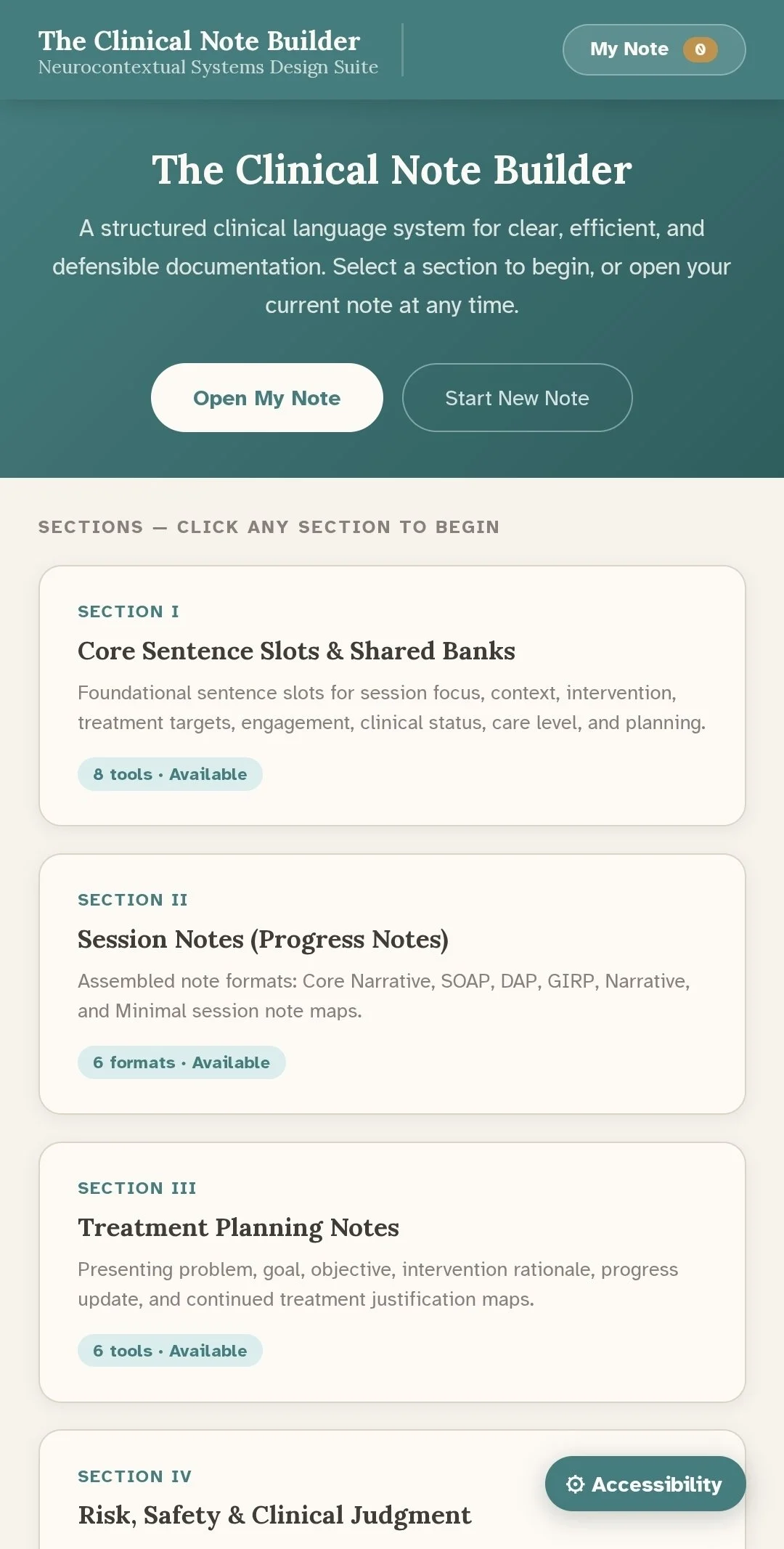
The Clinical Note Builder: NSDS Interactive
Sale Price: $47.00 Original Price: $67.00
Alexithymia Handbook — DEMO · NSDS
Demo Introduction, Understanding Emotions & Emotions Wheel preview active · 11 sections locked · Full version includes all 14 sections + modes + encrypted remote delivery

Creative Solutions Coaching · Neurocontextual Systems Design Suite

Alexithymia Handbook

Get to Know Your Interoception Sense

Demo Version

🔍 You're exploring the Demo Version

Introduction, Understanding Emotions, and the Emotions Wheel preview are active. The full licensed version includes all 14 sections:

  • Introduction · Understanding Emotions · Emotions Wheel (with full interactive sub-emotion selection)
  • Trigger Identification — four trigger types with structured entry rows
  • Emotional Reflection Worksheet — name, locate, trace and rate each emotion
  • Body Scan — tap a body figure to record pressure points, sensations and linked emotions
  • Check-In Tracker — log emotional check-ins with intensity, sensation and notes
  • Daily Awareness · Body–Emotion Journal · Emotion Labeling · Expression Practice · Coping Journal
  • Weekly Reflection — review patterns, growth, and what changed over the week
  • Meditation Guide — body-awareness script with animated breathing circle
  • In-Session mode · Remote/Async mode (PIN-encrypted) · Personal mode (auto-save)
  • Print-ready summaries for clinical records
📘

Introduction

What is Alexithymia?

Alexithymia is difficulty recognizing, understanding, or expressing emotions. It is not a mental illness, but a difference in emotional processing, often found in neurodivergent individuals.

Signs of Alexithymia

  • Trouble identifying emotions
  • Difficulty distinguishing between emotions (e.g. anger vs frustration)
  • Rarely talking about feelings
  • Relying on logic over emotions
  • Physical discomfort or tension without knowing why

What is Interoception?

Interoception is the awareness of internal body signals, such as:

  • Heart rate
  • Breathing
  • Muscle tension
  • Gut sensations (hunger, fullness, butterflies)
Why it matters: Interoception helps you notice emotions early and manage them effectively.

The Connection Between Body and Emotion

  • Emotions often start as bodily sensations.
  • People with alexithymia may notice body sensations but not realize they represent an emotion.
  • Strengthening interoception links body signals → emotional awareness → expression.
💡

Understanding Emotions

Core and Complex Emotions

Think of emotions as existing on two levels: core emotions and complex emotions. Core emotions are simple, basic feelings that almost everyone experiences — happiness, sadness, anger, fear, disgust, and calm. They are the building blocks of our emotional world.

Happiness might feel like lightness in your chest or a warmth spreading through your body.
Sadness can feel heavy, like a weight pressing down on you.
Anger might show up as tension in your shoulders or a clenched jaw.
Fear / Anxiety can make your stomach tighten or your heart beat faster.
Disgust might create a sense of pulling back or nausea.
Calm often brings a feeling of softness, ease, and groundedness.

Complex emotions are combinations of these core feelings — like guilt (sadness + self-awareness) or pride (happiness + accomplishment).

Common Challenges

It is common for adults with alexithymia to struggle with emotions. You might notice:

  • Feeling vague physical sensations without knowing the emotion behind them
  • Confusing one emotion for another
  • Suppressing feelings because they are uncomfortable or unclear
  • Struggling to talk about emotions with others
Understanding that these challenges are normal can help you approach emotional awareness with patience and self-compassion. You are not broken — you are learning a skill.

The Body-First Approach

One of the most effective ways to understand emotions when you have alexithymia is to start with your body:

  1. Notice what you feel physically
  2. Describe the sensation using simple words (tight, heavy, warm, fluttery)
  3. Ask yourself which emotion might correspond to that sensation
  4. Record or reflect — through journaling, drawing, or an emotion wheel
🎡

Emotions Wheel

The Emotions Wheel maps six core emotion families — each with sub-emotions ordered from mild to intense. Selecting sub-emotions updates the live radar chart below, showing the shape of your emotional experience.

Emotion Intensity Radar (Demo) Full version — select emotions to see your chart
🔒

Interactive Selection — Full Version

In the full version, tap any sub-emotion to select it — the radar chart updates live to show the shape of your emotional experience. Sub-emotions are ordered mild → intense within each category.

Request Full Access →
🔒

11 More Sections in the Full Version

After the Emotions Wheel, the full handbook continues with structured tools for triggers, reflection, body mapping, journaling, and more.

  • Trigger Identification — sensory, relational, internal & situational trigger mapping
  • Emotional Reflection Worksheet — name, locate, trace and intensity-rate each emotion
  • Body Scan — tap a body silhouette to log pressure points and linked sensations
  • Check-In Tracker — timestamped logs of sensation, intensity, emotion and notes
  • 5 Journaling sections — daily awareness, body–emotion, labeling, expression, coping
  • Weekly Reflection — pattern review and growth tracking over time
  • Meditation Guide — body-awareness script with animated breathing circle
  • 3 usage modes — In-Session, Remote/Async (PIN-encrypted), Personal (auto-save)
Request Full Access at creativesolutionscoaching.com →

Alexithymia Handbook — Demo Version

Part of the Neurocontextual Systems Design Suite (NSDS), developed to support the clinical application of the NST Framework.

© 2026 Creative Solutions Coaching, PLLC · Elizabeth Morrison, Developer · www.creativesolutionscoaching.com

No data is stored on any server · Not a diagnostic instrument · Licensed for individual clinical and educational use only, not for redistribution.