 Image 1 of 1
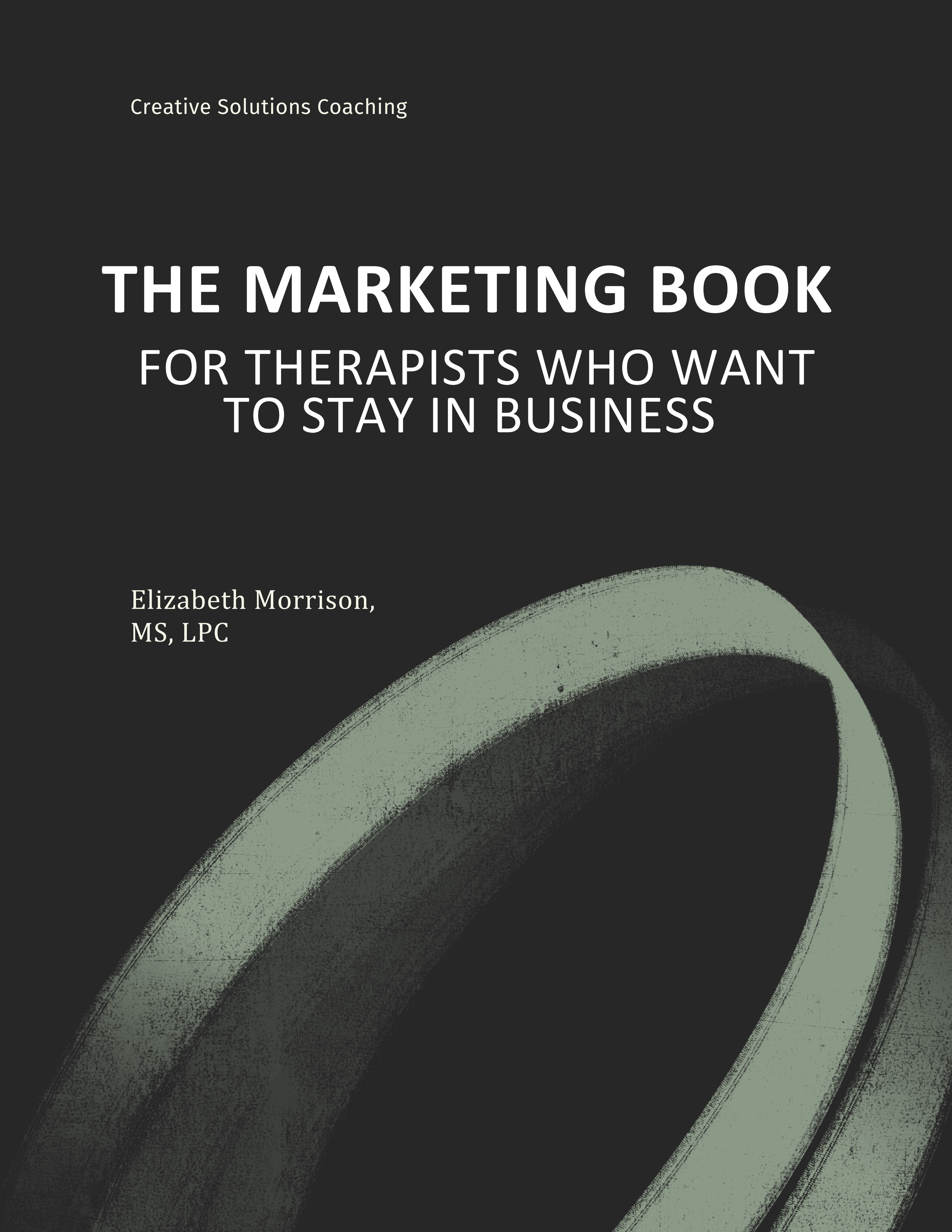
The Marketing Book for Therapists Who Want to Stay in Business (Digital Edition)
$24.99
The Marketing Book for Therapists Who Want to Stay in Business is a professional guide to building ethical, practical marketing systems for mental health practices.
Rather than focusing on branding, hustle, or social media performance, this book presents eighteen complete marketing campaigns designed specifically for therapists. Each campaign shows what to build, how to run it, how to tell if it’s working, and what to adjust when it isn’t.
The campaigns are organized into nine categories based on how therapists actually get clients, including referral relationships, client-direct outreach, workshops and community education, owned email systems, insurance participation, search visibility, telehealth, capacity-based marketing, and special population work.
Each campaign includes:
– who it is for
– what problem it solves
– what you create
– implementation timelines
– execution checkpoints
– materials and templates
Full campaigns also include failure modes, operational metrics, maintenance cadence, decision rules, adaptations, and compliance considerations.
This book is written for therapists who want stability rather than spectacle. It does not require building a personal brand, performing online, or maintaining constant content production. It is designed to be used as a reference tool over time, with most clinicians implementing one or two campaigns at a time based on their capacity and practice model.
This book is for licensed therapists in private or group practice who want structured, ethical marketing systems. It is not a workbook, course, or clinical training product, and it does not promise specific business outcomes.
The Marketing Book for Therapists Who Want to Stay in Business is a professional guide to building ethical, practical marketing systems for mental health practices.
Rather than focusing on branding, hustle, or social media performance, this book presents eighteen complete marketing campaigns designed specifically for therapists. Each campaign shows what to build, how to run it, how to tell if it’s working, and what to adjust when it isn’t.
The campaigns are organized into nine categories based on how therapists actually get clients, including referral relationships, client-direct outreach, workshops and community education, owned email systems, insurance participation, search visibility, telehealth, capacity-based marketing, and special population work.
Each campaign includes:
– who it is for
– what problem it solves
– what you create
– implementation timelines
– execution checkpoints
– materials and templates
Full campaigns also include failure modes, operational metrics, maintenance cadence, decision rules, adaptations, and compliance considerations.
This book is written for therapists who want stability rather than spectacle. It does not require building a personal brand, performing online, or maintaining constant content production. It is designed to be used as a reference tool over time, with most clinicians implementing one or two campaigns at a time based on their capacity and practice model.
This book is for licensed therapists in private or group practice who want structured, ethical marketing systems. It is not a workbook, course, or clinical training product, and it does not promise specific business outcomes.