
Creative Insights
Building a Life That Does Not Require Burnout to Function
After burnout, most people spend months or years in recovery. They rest. They reduce demands. They slowly rebuild capacity. And then they face a choice: do they return to the life that caused burnout, hoping they can manage it better this time? Or do they build something different?
Many people choose the first option because it feels easier. The systems were already in place. The routines were established. Going back seems simpler than starting over. But going back recreates the conditions that caused collapse. Within months — sometimes weeks — the cycle restarts.
The way to break this pattern is not managing the old life better. It is building a new life that fits the nervous system you actually have. This is not about lowering expectations or giving up on goals. This is about designing systems that work with your neurology instead of against it.
Workplace Survival for Autistic Adults
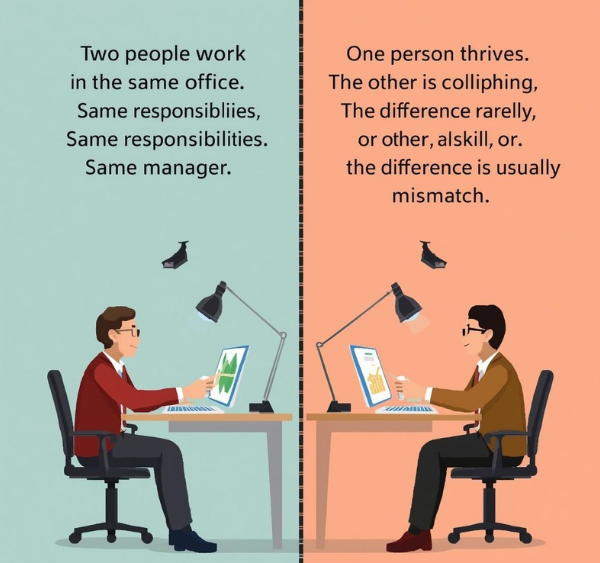
Two people work in the same office. Same role. Same responsibilities. Same manager. One person thrives. The other is collapsing. The difference is rarely effort, skill, or commitment. The difference is usually mismatch.
For autistic adults, workplaces are often designed in ways that create chronic overload. Open office plans. Constant interruptions. Unclear expectations. Rapid task-switching. Social demands layered on top of technical work. Fluorescent lighting. Background noise. Meetings that could have been emails. None of these are inherently problems. They become problems when they exceed what a nervous system can sustainably handle.
For neurotypical employees, these conditions may be annoying but manageable. For autistic employees, they can be the difference between functioning and burnout. This is not about being less capable. This is about environments that do not match neurological needs.
Burnout at work is not personal failure. It is environmental mismatch. When the environment changes, functioning can improve. When it cannot change, leaving is self-preservation — not defeat.
Recovering From Autistic Burnout: Structural Change, Not Just Rest
Recovery from autistic burnout is not about getting back to normal. It is about building a new normal that matches capacity rather than overriding it. This takes time. It takes support. It takes structural change. And it takes releasing the belief that struggling means failing.
First: Reduce & Rest
Lower demands to absolute minimum. This is triage, not failure.
Then: Grieve & Rebuild
Do both pathways simultaneously — environmental and narrative.
Always: Change the Conditions
Returning to what caused burnout recreates it. Structural change is permanent.
The Three Stages: How Burnout Happens and Where to Intervene
The hardest thing about burnout is that it's most treatable before it looks like burnout. Stage One — chronic mismatch — can persist for years while functioning appears intact. Stage Two strips away sleep, sensory tolerance, and executive function one layer at a time. By Stage Three, the nervous system enforces rest whether the person wants it or not. This article maps all three stages, what each one feels like from the inside, and where intervention is still possible.
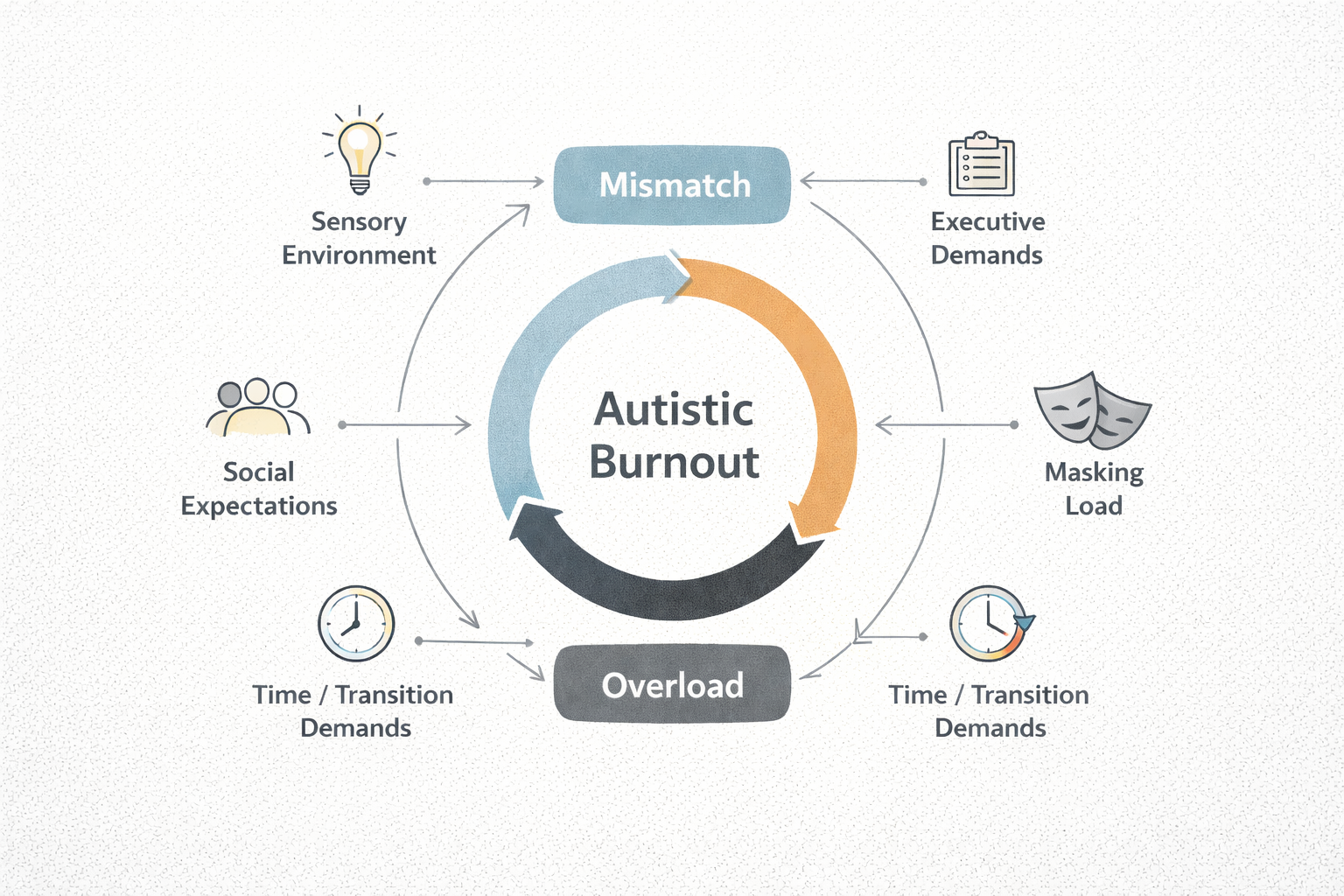
What Autistic Burnout Actually Is
You wake up exhausted. You slept. You rested. You cancelled things, said no, took the weekend. And still, something that used to be easy is not easy anymore. You sit with the task. You know how to do it. You have done it a hundred times. And your brain will not move.
This is not laziness. This is not a bad week. This is what happens when a nervous system has been asked to give more than it has, for longer than it should, without enough time to come back.
Autistic burnout does not arrive suddenly. It accumulates. And it does not leave with rest alone, because rest does not change the thing that caused it. The job is still there. The noise is still there. The performance of being fine is still there. And so the depletion continues, quietly, until it cannot be managed anymore.
This article is about what burnout actually is, why it is so often mistaken for something else, and what recovery actually requires.
Under the Surface: The Science of Masking and Authenticity
Masking isn’t just “fitting in” — it’s a survival strategy that neurodivergent adults use every day to navigate a world that wasn’t built for them. But constant adaptation comes at a cost: stress, exhaustion, and a subtle erosion of authenticity.
In this post, we explore the science behind masking, what it looks like in real life, and how understanding it through the “layers-of-clothing” analogy can help neurodivergent adults and their allies appreciate the balance between survival and self-expression.