 Image 1 of 1
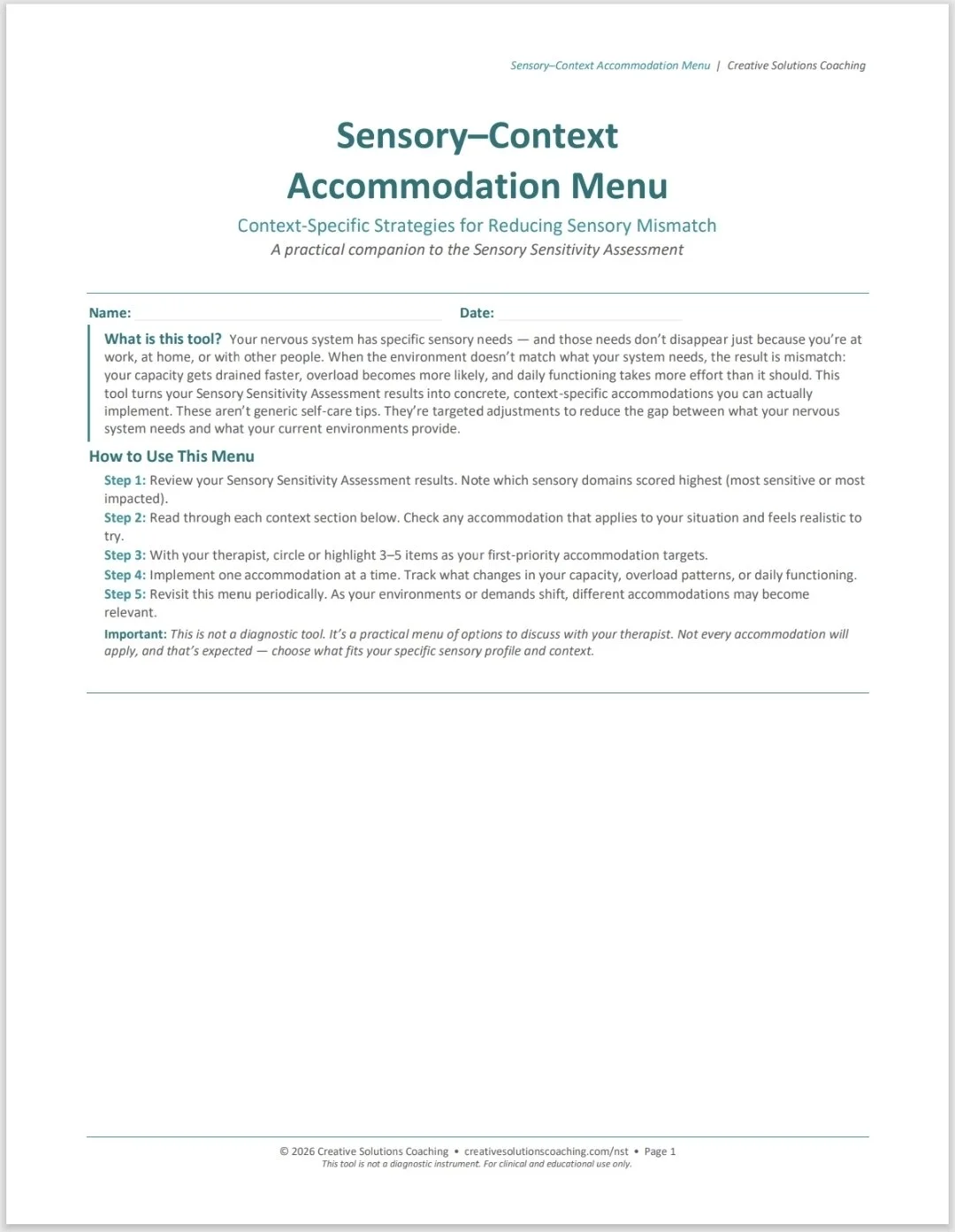
Generic sensory tips aren't the problem. You've probably read plenty of those. What's missing is a concrete, context-specific plan for your environments.
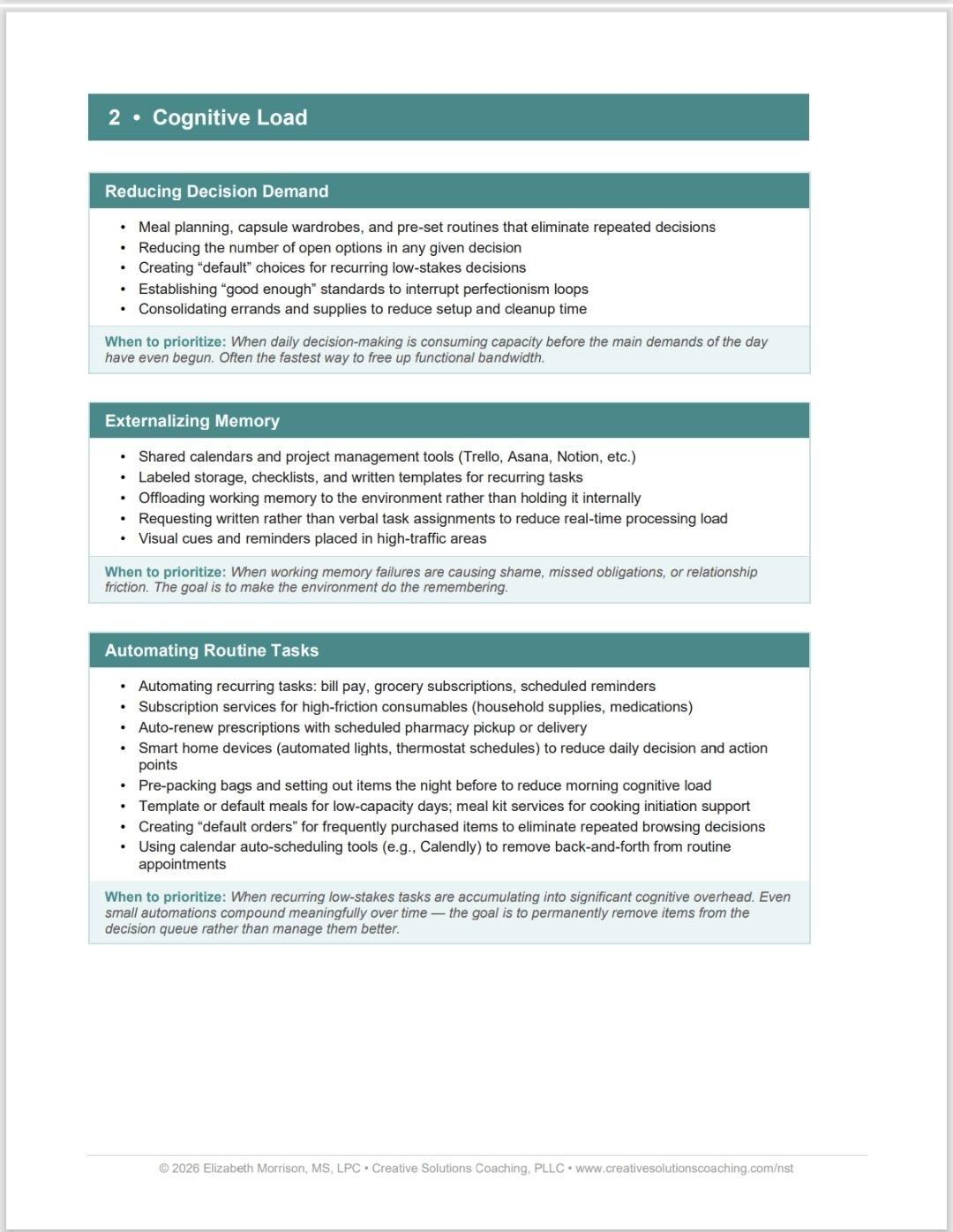
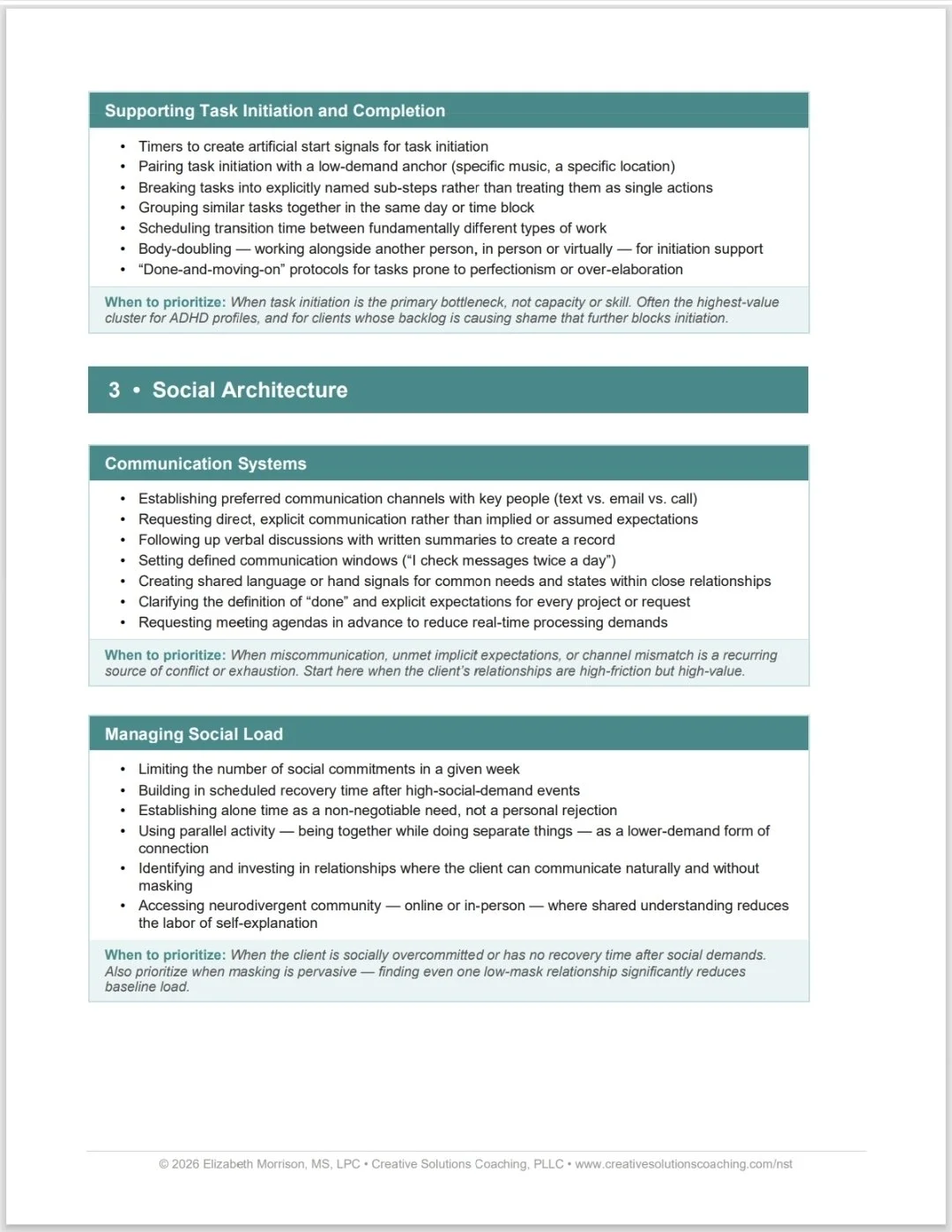
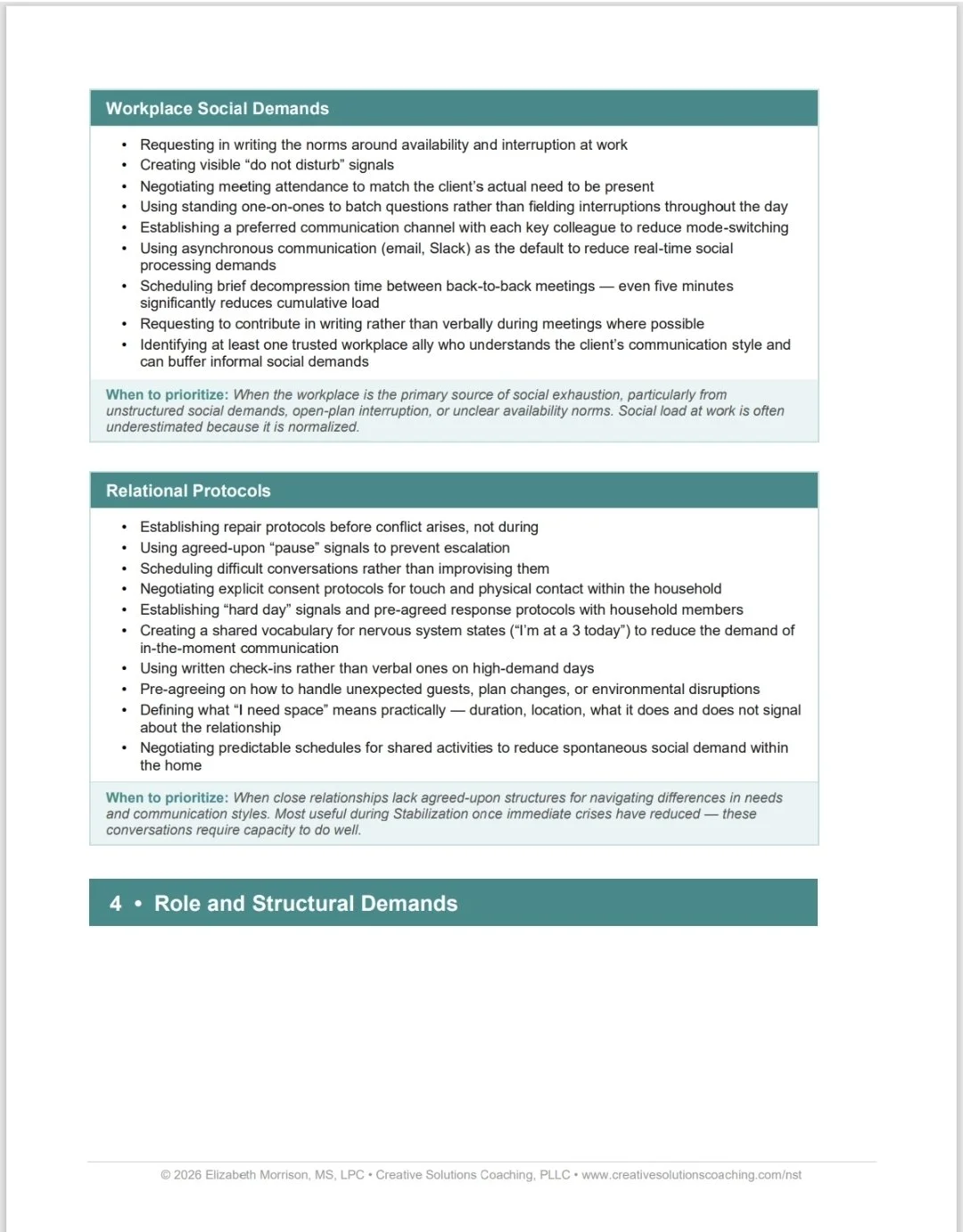
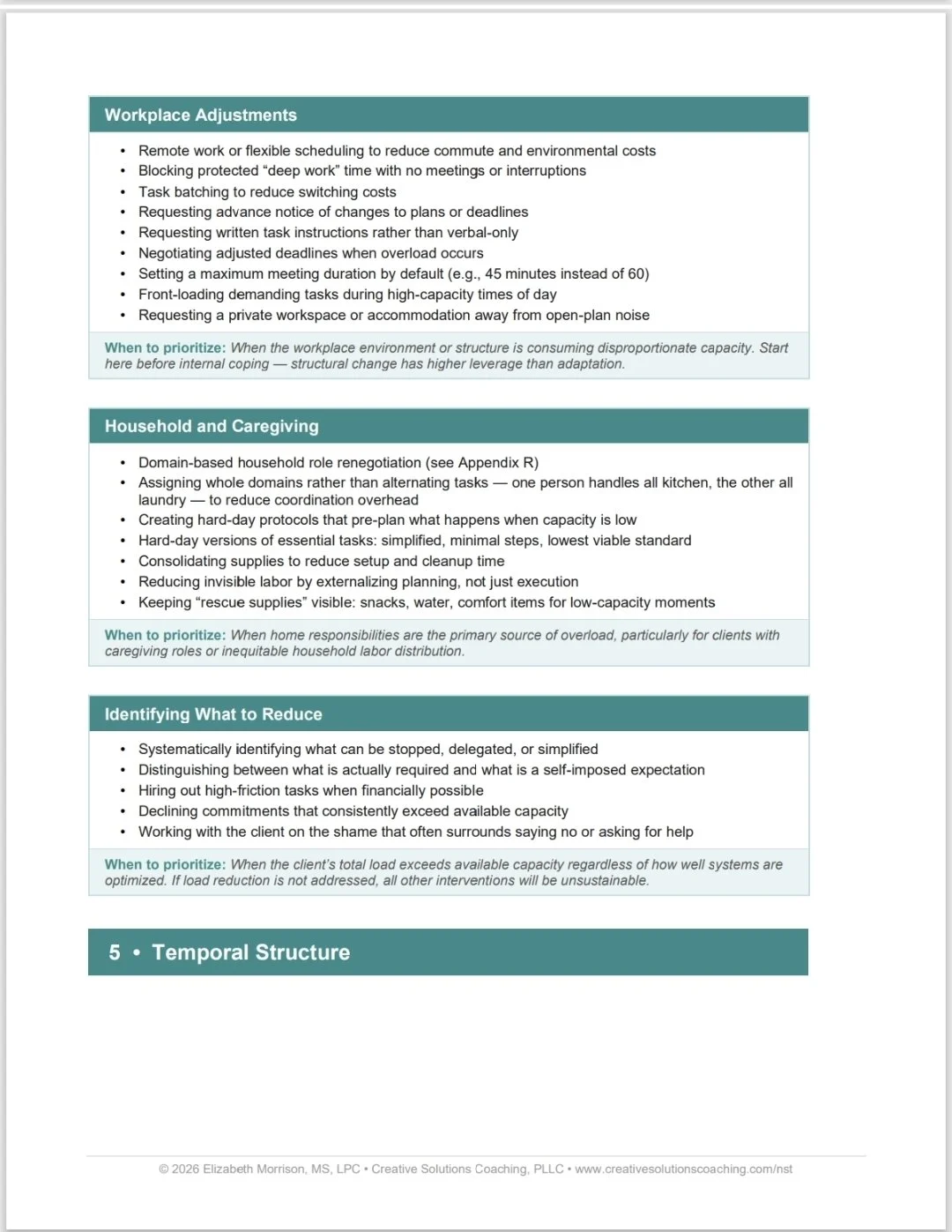
The Sensory–Context Accommodation Menu takes your sensory sensitivity profile and translates it into targeted accommodations you can actually implement — organized by the contexts where sensory mismatch actually happens.
The menu covers four real-life contexts:
Workstation & Office — lighting, sound, space, and communication adjustments
Home Routines & Living Space — structure, recovery, and household management
Social Settings & Relationships — before, during, and after social demands
Virtual Meetings & Digital Spaces — video calls, notifications, and screen fatigue
Includes a built-in Accommodation Action Plan to prioritize first steps with your therapist, plus reflection prompts to track what's actually working.
Designed for: Neurodivergent adults, therapists using it as a session tool, and caregivers supporting someone managing sensory differences.
What's included: 1 printable PDF (6 pages), letter-size.
This tool is not a diagnostic instrument. For clinical and educational use only.
Generic sensory tips aren't the problem. You've probably read plenty of those. What's missing is a concrete, context-specific plan for your environments.
The Sensory–Context Accommodation Menu takes your sensory sensitivity profile and translates it into targeted accommodations you can actually implement — organized by the contexts where sensory mismatch actually happens.
The menu covers four real-life contexts:
Workstation & Office — lighting, sound, space, and communication adjustments
Home Routines & Living Space — structure, recovery, and household management
Social Settings & Relationships — before, during, and after social demands
Virtual Meetings & Digital Spaces — video calls, notifications, and screen fatigue
Includes a built-in Accommodation Action Plan to prioritize first steps with your therapist, plus reflection prompts to track what's actually working.
Designed for: Neurodivergent adults, therapists using it as a session tool, and caregivers supporting someone managing sensory differences.
What's included: 1 printable PDF (6 pages), letter-size.
This tool is not a diagnostic instrument. For clinical and educational use only.