
Creative Insights
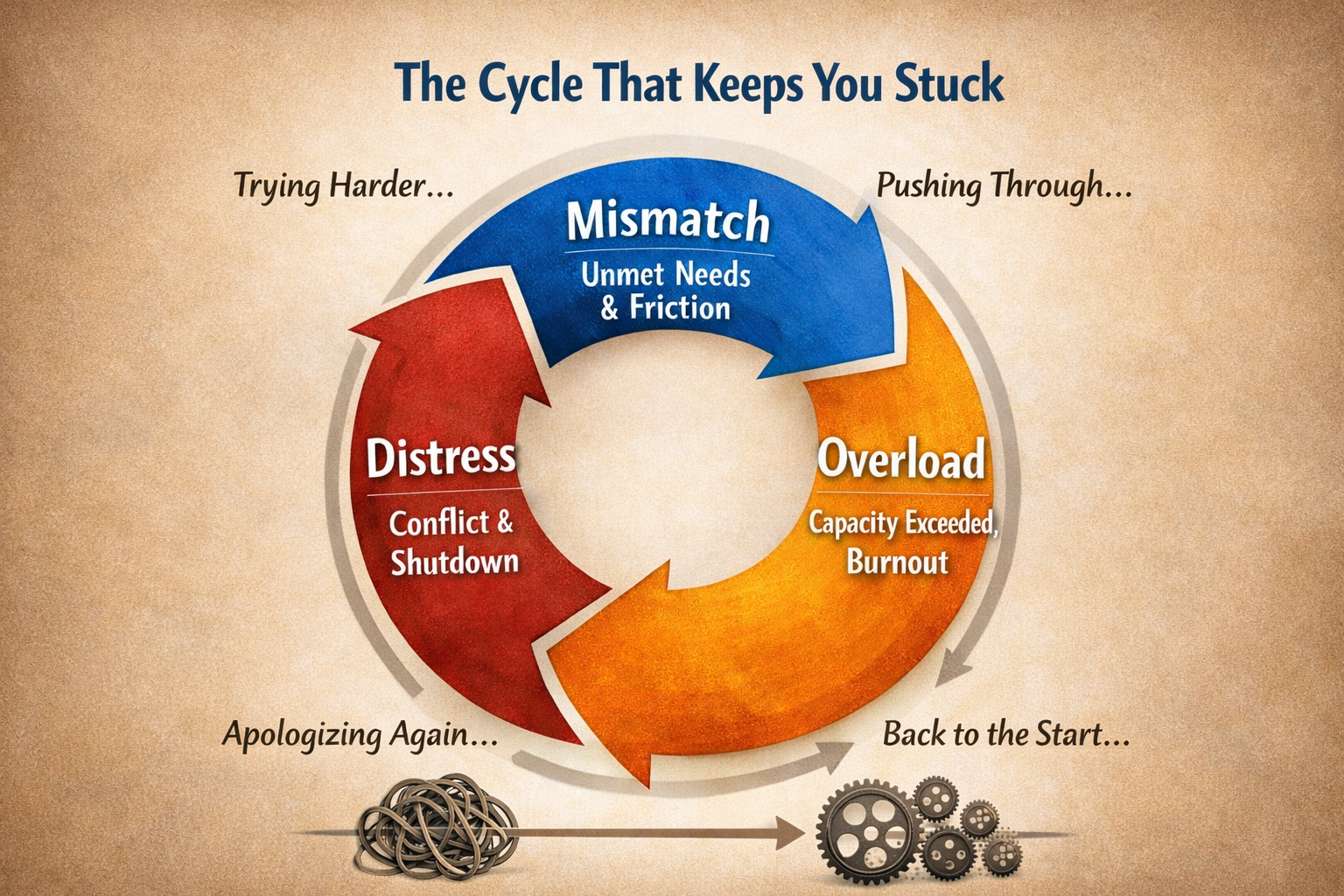
The Cycle That Keeps You Stuck: Why Effort Alone Doesn’t Fix Mixed-Neurotype Relationships
Many adults in mixed-neurotype relationships find themselves caught in the same exhausting pattern: try harder, communicate better, push through, apologize, reset — and somehow end up right back where they started.
This is not a failure of care. It is not a failure of effort.
It is a structural problem being treated as a personal one.
When nervous systems operate differently, mismatch creates overload. Overload leads to distress. And distress makes it nearly impossible to address the original mismatch. The cycle feeds itself — and most relationship advice assumes that cycle isn’t running.
In this article, we explore the mismatch–overload–distress pattern, the hidden role of fluctuating capacity, and the invisible cognitive and emotional labor that often goes unnamed. When you can see the structure, you stop blaming yourself for struggling inside it — and you can begin redesigning systems that actually work.
Autism Testing: What to Expect and How the Evaluation Process Works
Featured Guest Blog from Dr. Lana Ferris, ND at Haven Health & Wellness!
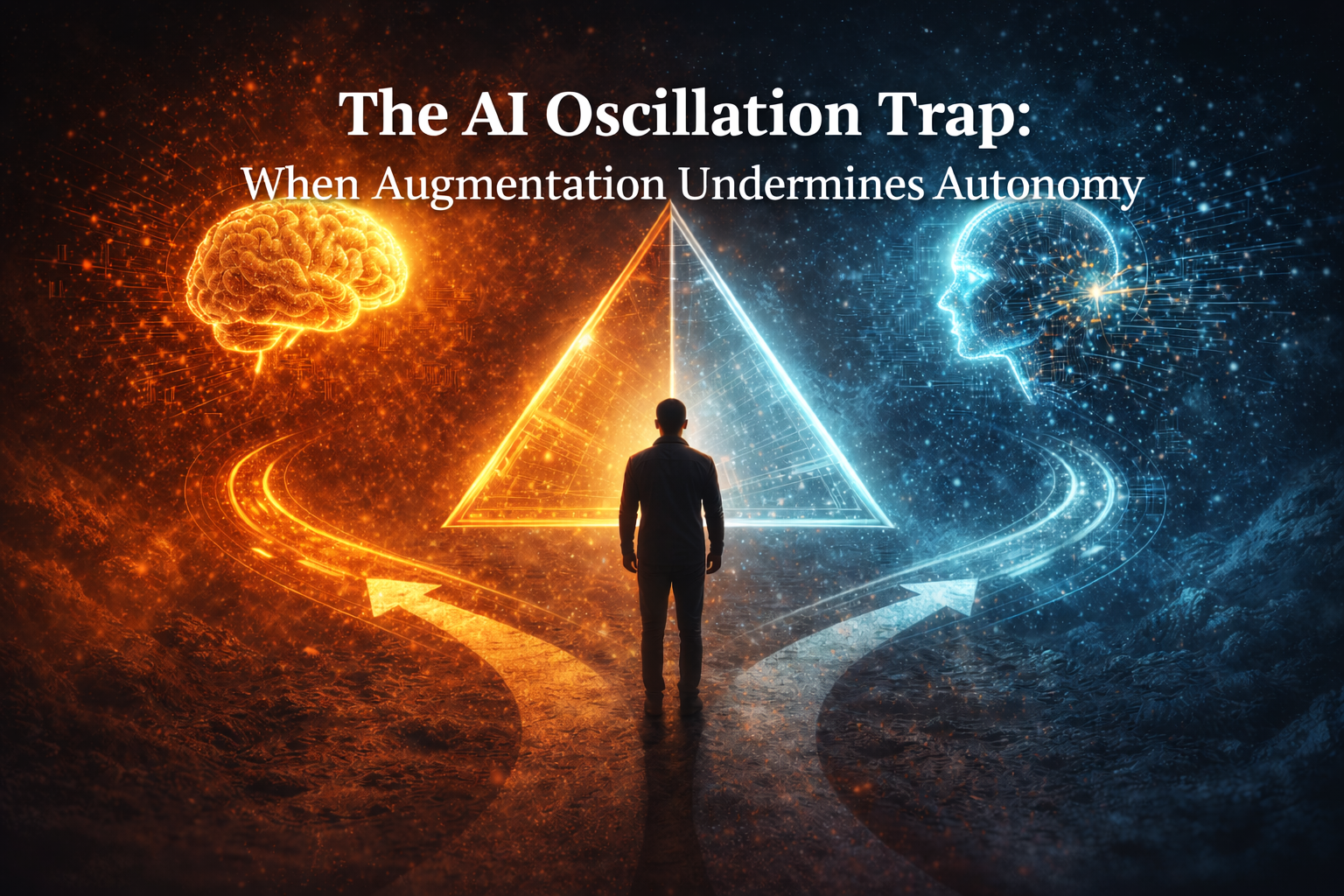
The AI Oscillation Trap: When Augmentation Undermines Autonomy
AI feels like help until it quietly starts reshaping how you think. Not because you “overuse” it, but because most people bounce between outsourcing and taking control back, over and over, without stable roles. That oscillation can erode confidence, weaken judgment in context, and make decision-making feel either heavier or strangely hollow. This post names the trap, explains why it happens even when you are using AI “well,” and gives a practical way to stabilize your division of labor so AI supports autonomy instead of undermining it.
When AI Sounds Right: Why Fluency Produces False Confidence
AI does not need to be wrong to mislead. It only needs to sound right.
Fluent, confident language triggers trust long before judgment has a chance to engage. This post examines why ease feels like accuracy, how fluency shortcuts human evaluation, and what it takes to maintain judgment when language arrives already resolved.
When Pattern Recognition Becomes a Trap
Pattern recognition can look like clarity, especially when language is fluent and confident. But coherence is not the same thing as understanding. When pattern-based systems are treated as sources of meaning rather than drafts for judgment, decisions begin to shortcut context, values, and consequences.
This becomes a trap in high-stakes environments where speed and polish are rewarded. Individuals receive plans that ignore capacity. Clinicians inherit frameworks that sound complete but bypass nuance. Organizations adopt systems that appear efficient while quietly increasing fragility under stress.
The problem is not the use of tools, but the substitution of judgment. Pattern recognition can assist thinking, but it cannot evaluate what matters, what conflicts, or what will break over time. When “sounds right” replaces discernment, the cost is often borne later—in burnout, ethical drift, and systems that fail precisely when they are needed most.
AI Predicts Patterns, Not Meaning: The Limits of Language Models
Artificial intelligence can produce language that sounds thoughtful, calm, and authoritative. This article examines why that fluency is misleading, how language-based models actually generate text, and what is lost when prediction quietly replaces human judgment and responsibility.
Under the Surface: The Science of Masking and Authenticity
Masking isn’t just “fitting in” — it’s a survival strategy that neurodivergent adults use every day to navigate a world that wasn’t built for them. But constant adaptation comes at a cost: stress, exhaustion, and a subtle erosion of authenticity.
In this post, we explore the science behind masking, what it looks like in real life, and how understanding it through the “layers-of-clothing” analogy can help neurodivergent adults and their allies appreciate the balance between survival and self-expression.
Why the Self Care Wheel Is a Game-Changer for Your Well-Being
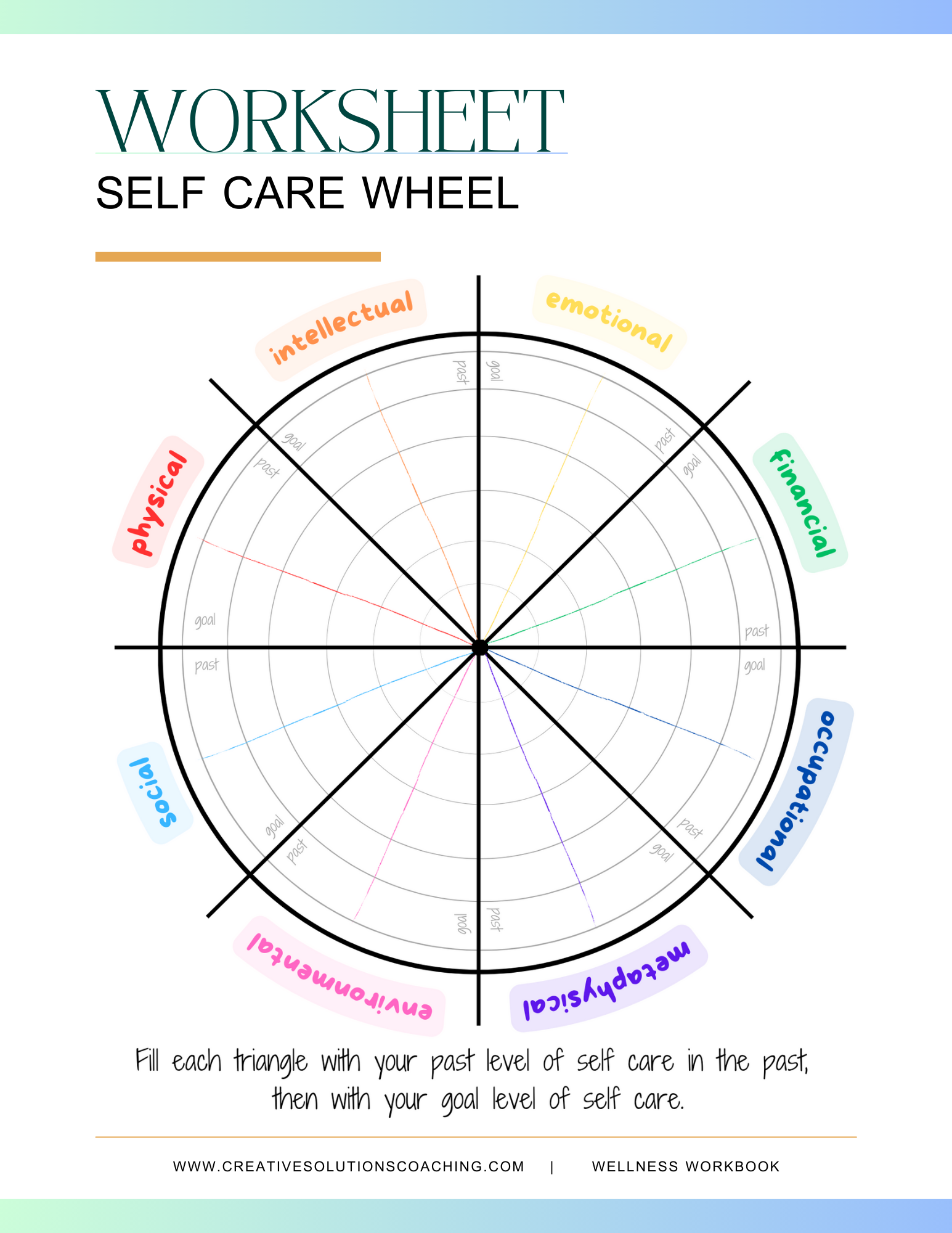
Self-care is more than routines or rest days. The Self Care Wheel is a simple, visual tool that helps you assess balance across physical, emotional, social, financial, and environmental areas so you can set realistic, sustainable self-care goals without overwhelm.
But more than tracking habits or checking boxes, the Self Care Wheel helps you understand how different parts of your life affect each other. When one area is consistently drained, it often shows up elsewhere as stress, burnout, or feeling stuck. By seeing your well-being mapped out in one place, it becomes easier to identify where support is needed and where small changes can have the greatest impact.
Rather than asking you to do everything at once, the Self Care Wheel encourages reflection, flexibility, and progress that fits your real life. If your energy, focus, or priorities change, the wheel can change with you.