 Image 1 of 2
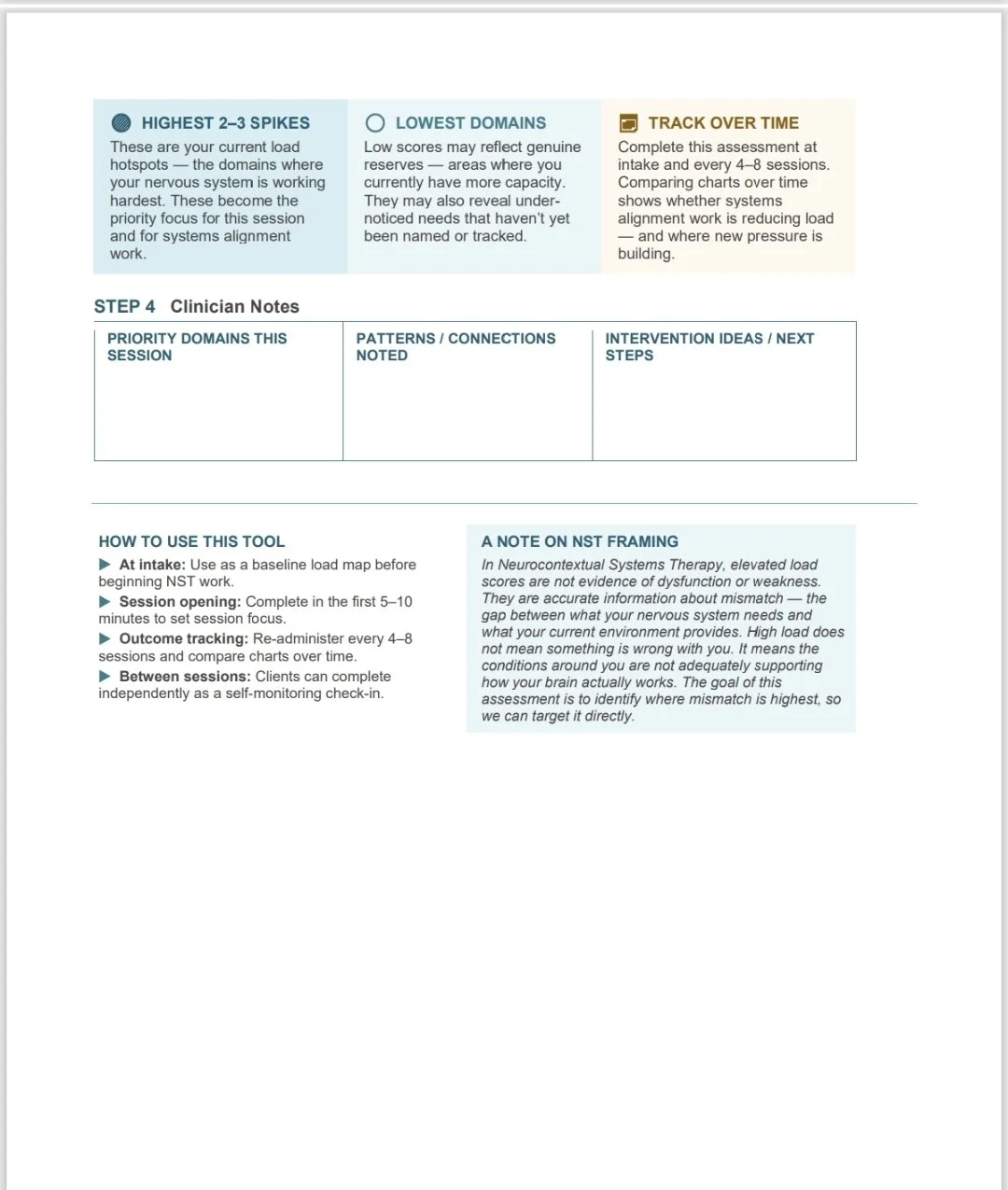 Image 2 of 2
Before you can address overload, you need to see it clearly. The Context Load Radar gives you that picture — fast.
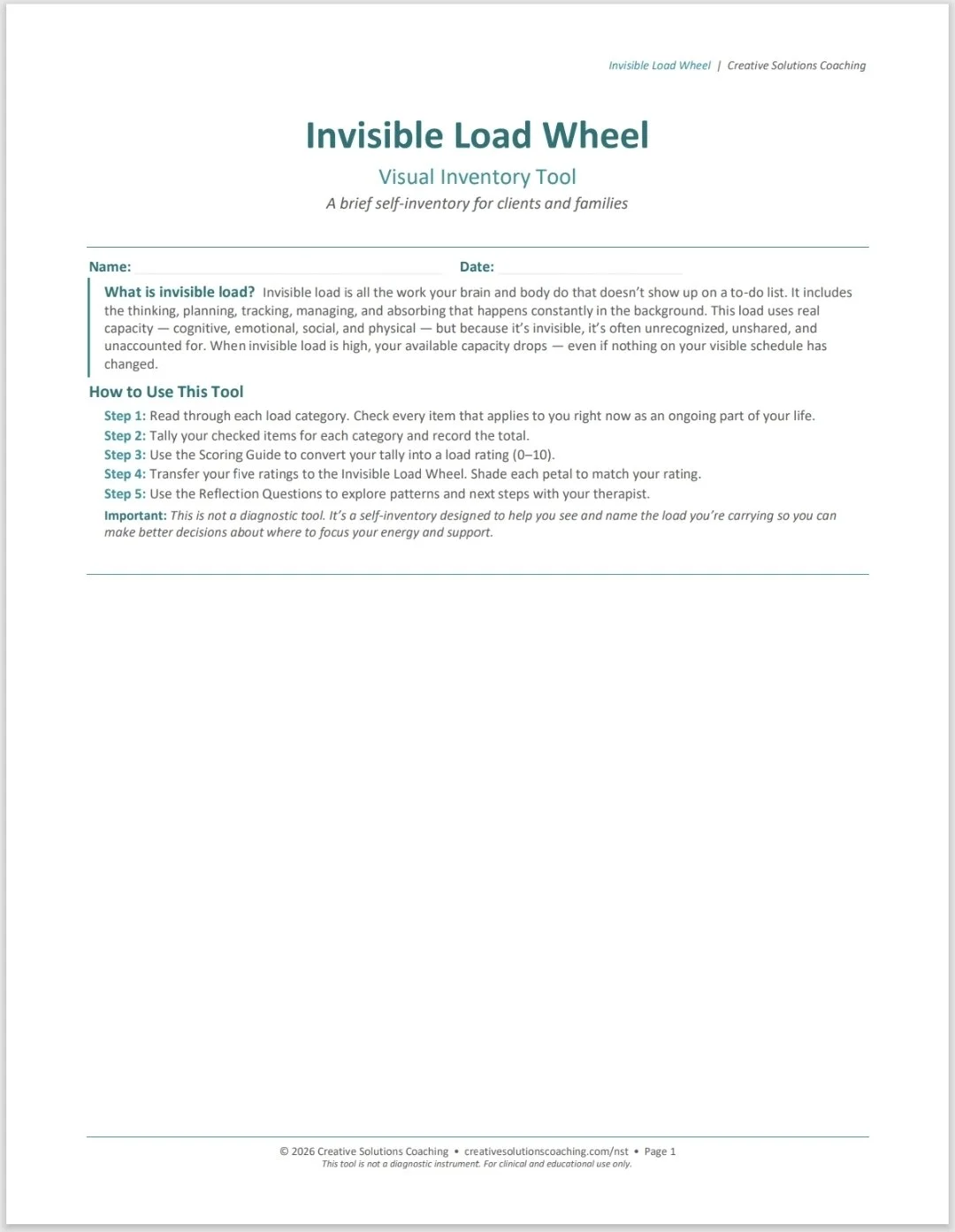
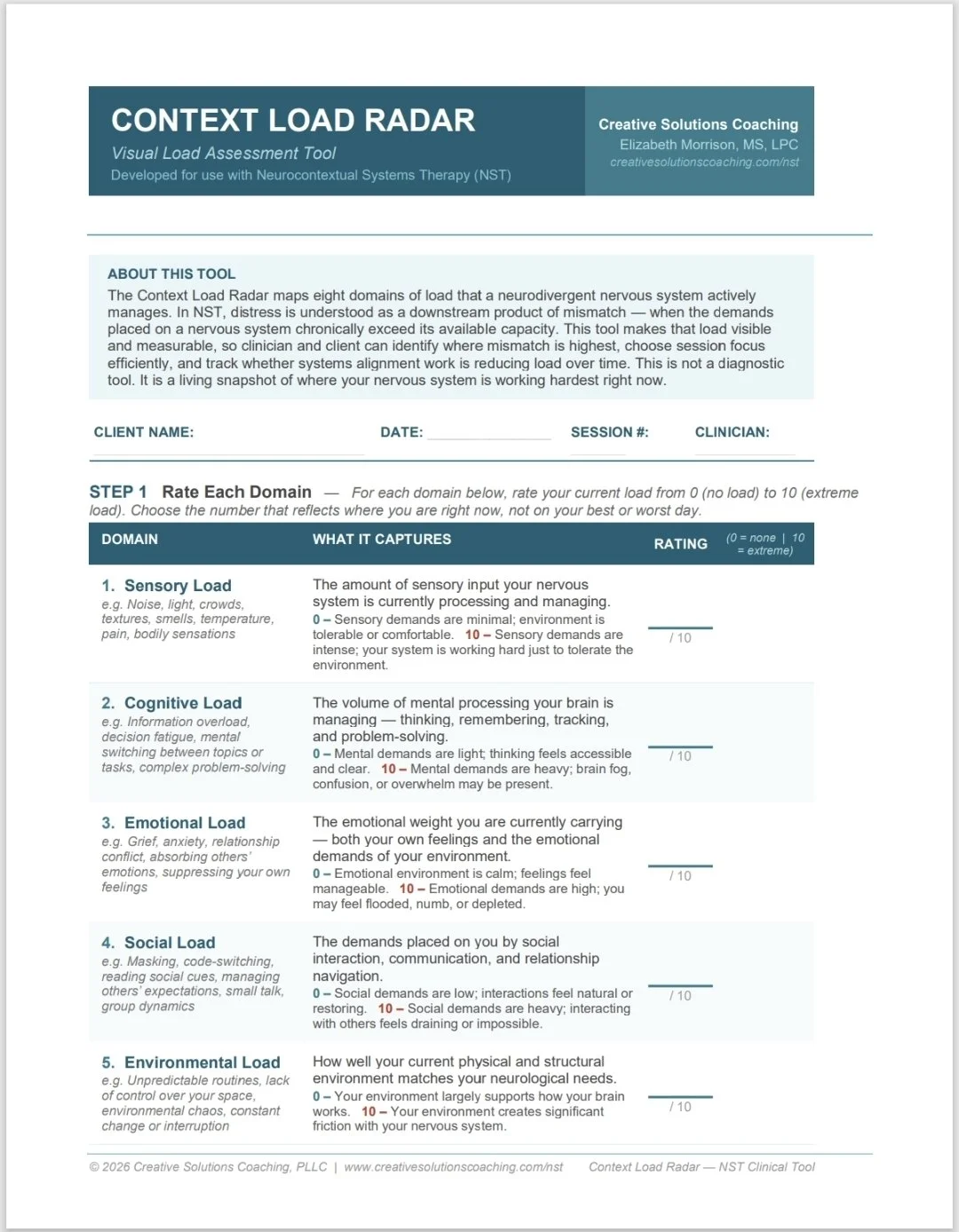
This clinical assessment tool maps eight domains of nervous system load onto a visual radar chart, creating an at-a-glance snapshot of where mismatch is highest right now. Designed for use within NST and neurodiversity-affirming practice, it can be completed in the first five minutes of a session to set focus, used at intake as a baseline, and re-administered every 4–8 sessions to track whether systems alignment work is actually reducing load over time.
The eight load domains:
Sensory — input the nervous system is processing and managing
Cognitive — mental processing, memory, tracking, and decision fatigue
Emotional — weight carried from personal feelings and others' demands
Social — masking, communication, relationship navigation
Environmental — how well the current environment fits neurological needs
Executive / Task — planning, initiation, organization, and follow-through
Identity / Self — shame, self-concept, internalized narratives
Body / Health — sleep, pain, illness, and physical capacity demands
Each domain is rated 0–10, mapped onto the radar, and interpreted using a built-in pattern guide. Includes a Clinician Notes section for priority domains, patterns observed, and intervention ideas.
Comparing radar charts over time makes progress concrete — and makes it clear when new pressure is building before it becomes a crisis.
Designed for: Clinicians using NST or neurodiversity-affirming frameworks, and neurodivergent adults using it as a between-session self-monitoring check-in.
What's included: 1 printable PDF, letter-size.
This tool is not a diagnostic instrument. For clinical and educational use only.
Before you can address overload, you need to see it clearly. The Context Load Radar gives you that picture — fast.
This clinical assessment tool maps eight domains of nervous system load onto a visual radar chart, creating an at-a-glance snapshot of where mismatch is highest right now. Designed for use within NST and neurodiversity-affirming practice, it can be completed in the first five minutes of a session to set focus, used at intake as a baseline, and re-administered every 4–8 sessions to track whether systems alignment work is actually reducing load over time.
The eight load domains:
Sensory — input the nervous system is processing and managing
Cognitive — mental processing, memory, tracking, and decision fatigue
Emotional — weight carried from personal feelings and others' demands
Social — masking, communication, relationship navigation
Environmental — how well the current environment fits neurological needs
Executive / Task — planning, initiation, organization, and follow-through
Identity / Self — shame, self-concept, internalized narratives
Body / Health — sleep, pain, illness, and physical capacity demands
Each domain is rated 0–10, mapped onto the radar, and interpreted using a built-in pattern guide. Includes a Clinician Notes section for priority domains, patterns observed, and intervention ideas.
Comparing radar charts over time makes progress concrete — and makes it clear when new pressure is building before it becomes a crisis.
Designed for: Clinicians using NST or neurodiversity-affirming frameworks, and neurodivergent adults using it as a between-session self-monitoring check-in.
What's included: 1 printable PDF, letter-size.
This tool is not a diagnostic instrument. For clinical and educational use only.