You're exhausted, but nothing on your schedule looks that bad. That gap — between how depleted you feel and what's "officially" on your plate — is invisible load.
Invisible load is everything your brain and body carry that doesn't show up on a to-do list: the planning, tracking, anticipating, managing, and absorbing that runs constantly in the background. It uses real capacity. It just doesn't get counted.
The Invisible Load Wheel makes it visible.
This self-inventory tool walks you through five load categories — each with 10 concrete, checkable items — and converts your results into a shaded visual wheel that shows, at a glance, where your capacity is actually going.
The five load categories:
Mental Load — planning, tracking, decision-making, and the to-do list that never fully clears
Emotional Load — managing your own feelings and other people's, staying regulated, suppressing needs
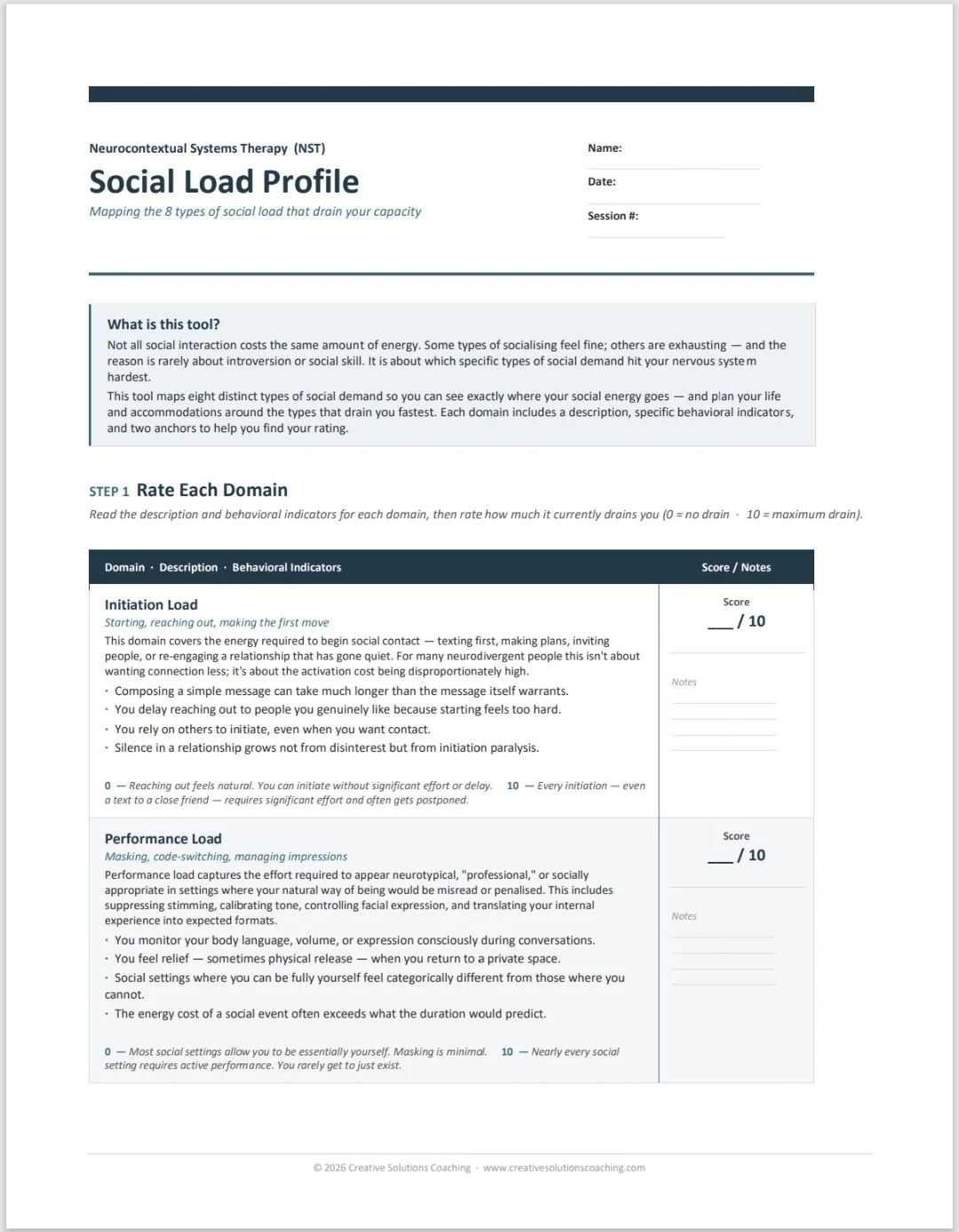
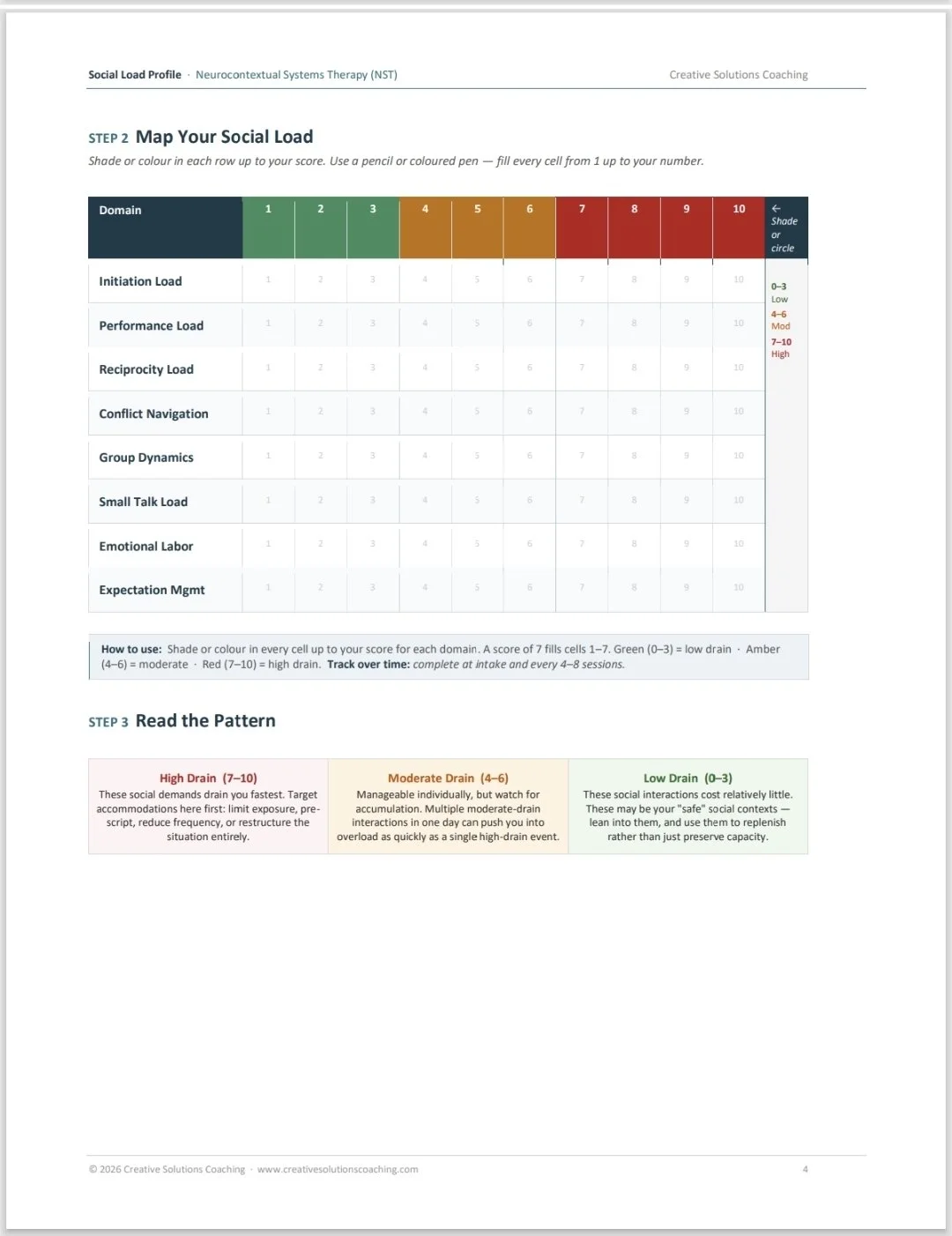
Social Load — masking, maintaining relationships, navigating unspoken expectations
Logistical Load — the behind-the-scenes management work that keeps daily life running
Sensory / Physical Load — pain, fatigue, sensory environments, and the effort of a body working harder than anyone sees
Includes a Scoring Guide, a visual Wheel to shade and compare over time, and Reflection Questions to bring patterns into session. Especially powerful when two people in the same household complete it side by side — it makes load imbalances concrete and discussable without blame.
Designed for: Neurodivergent adults, couples and families, and clinicians using it as a session or intake tool.
What's included: 1 printable PDF, letter-size.
This tool is not a diagnostic instrument. For clinical and educational use only.
You're exhausted, but nothing on your schedule looks that bad. That gap — between how depleted you feel and what's "officially" on your plate — is invisible load.
Invisible load is everything your brain and body carry that doesn't show up on a to-do list: the planning, tracking, anticipating, managing, and absorbing that runs constantly in the background. It uses real capacity. It just doesn't get counted.
The Invisible Load Wheel makes it visible.
This self-inventory tool walks you through five load categories — each with 10 concrete, checkable items — and converts your results into a shaded visual wheel that shows, at a glance, where your capacity is actually going.
The five load categories:
Mental Load — planning, tracking, decision-making, and the to-do list that never fully clears
Emotional Load — managing your own feelings and other people's, staying regulated, suppressing needs
Social Load — masking, maintaining relationships, navigating unspoken expectations
Logistical Load — the behind-the-scenes management work that keeps daily life running
Sensory / Physical Load — pain, fatigue, sensory environments, and the effort of a body working harder than anyone sees
Includes a Scoring Guide, a visual Wheel to shade and compare over time, and Reflection Questions to bring patterns into session. Especially powerful when two people in the same household complete it side by side — it makes load imbalances concrete and discussable without blame.
Designed for: Neurodivergent adults, couples and families, and clinicians using it as a session or intake tool.
What's included: 1 printable PDF, letter-size.
This tool is not a diagnostic instrument. For clinical and educational use only.

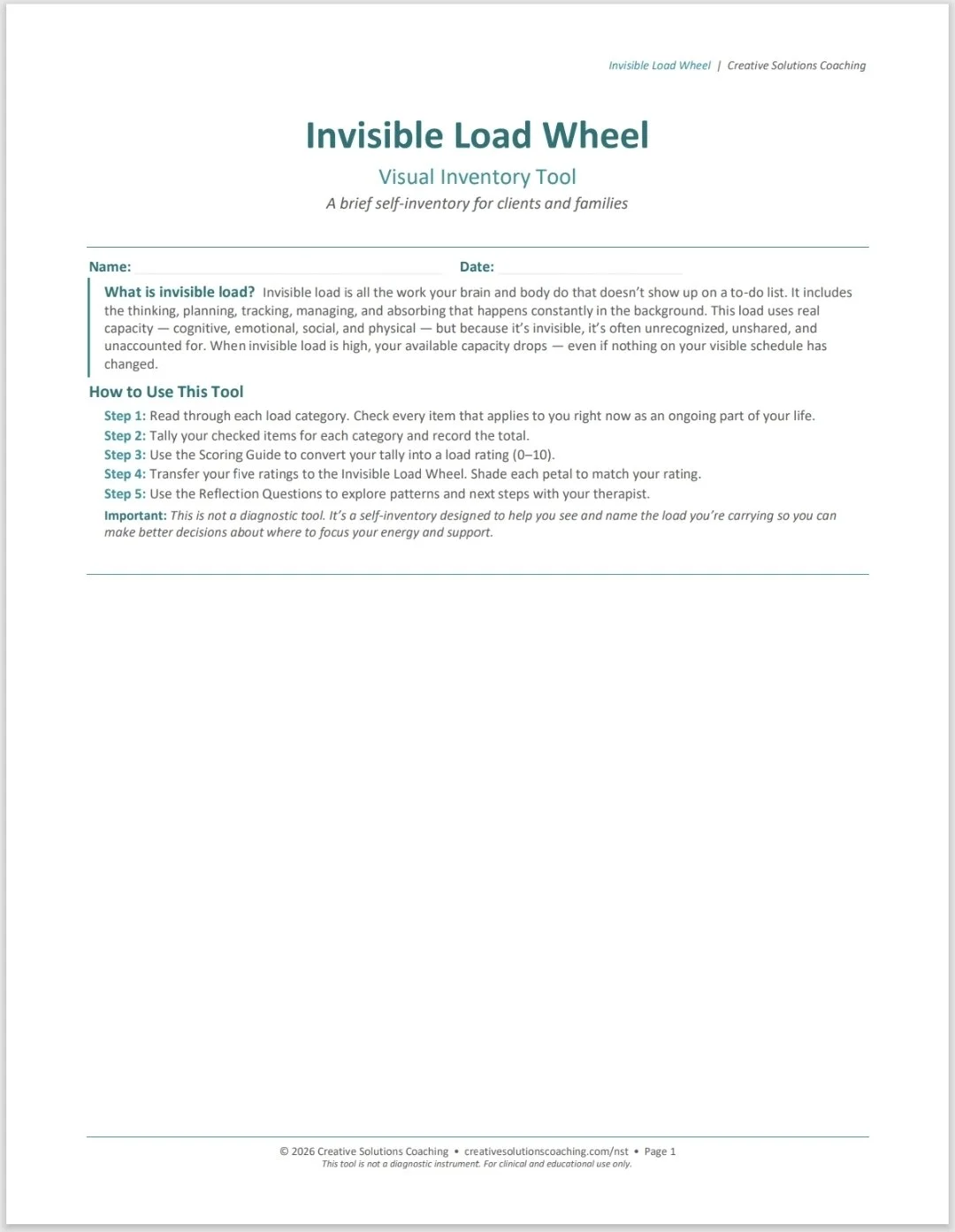 Image 1 of 4
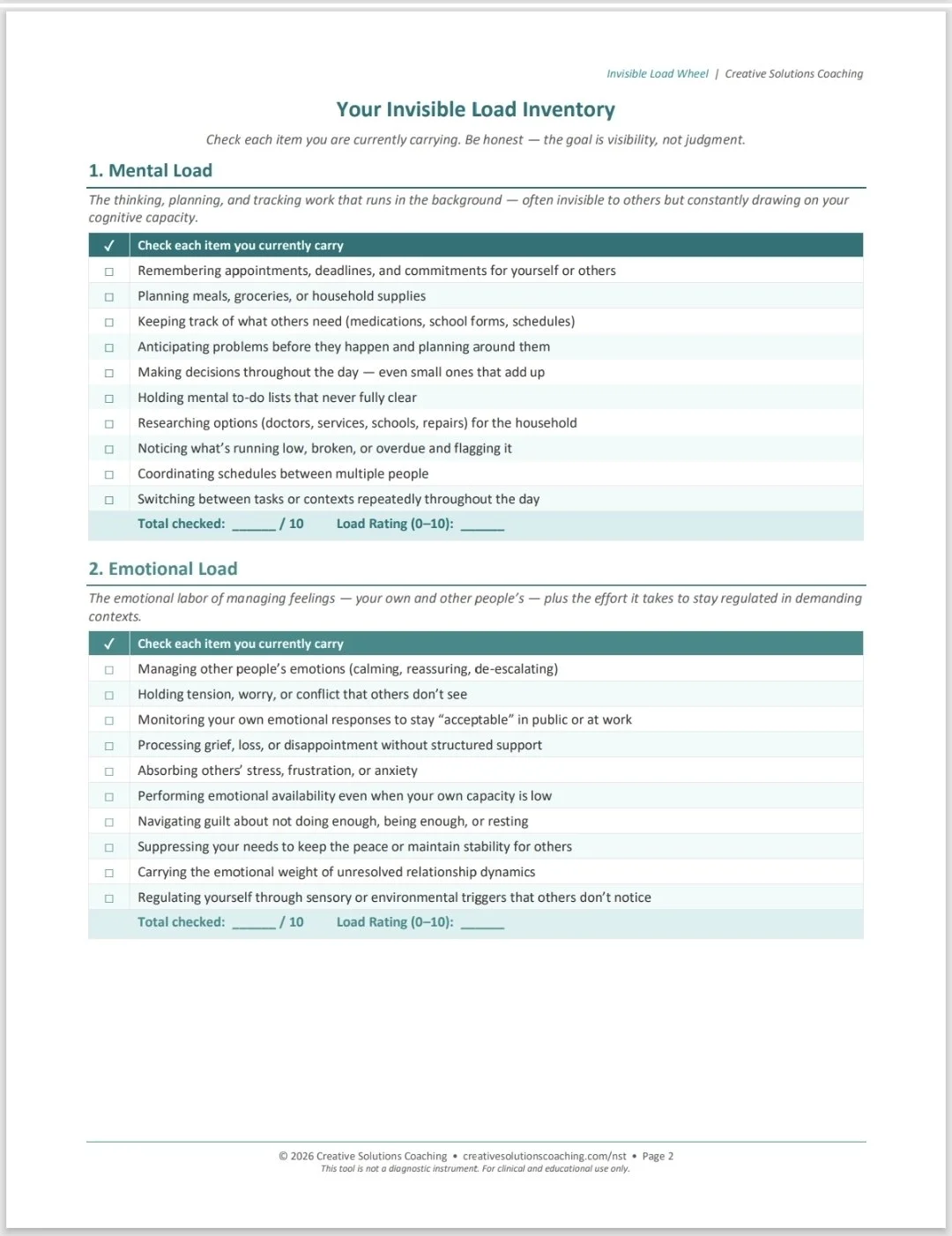 Image 2 of 4
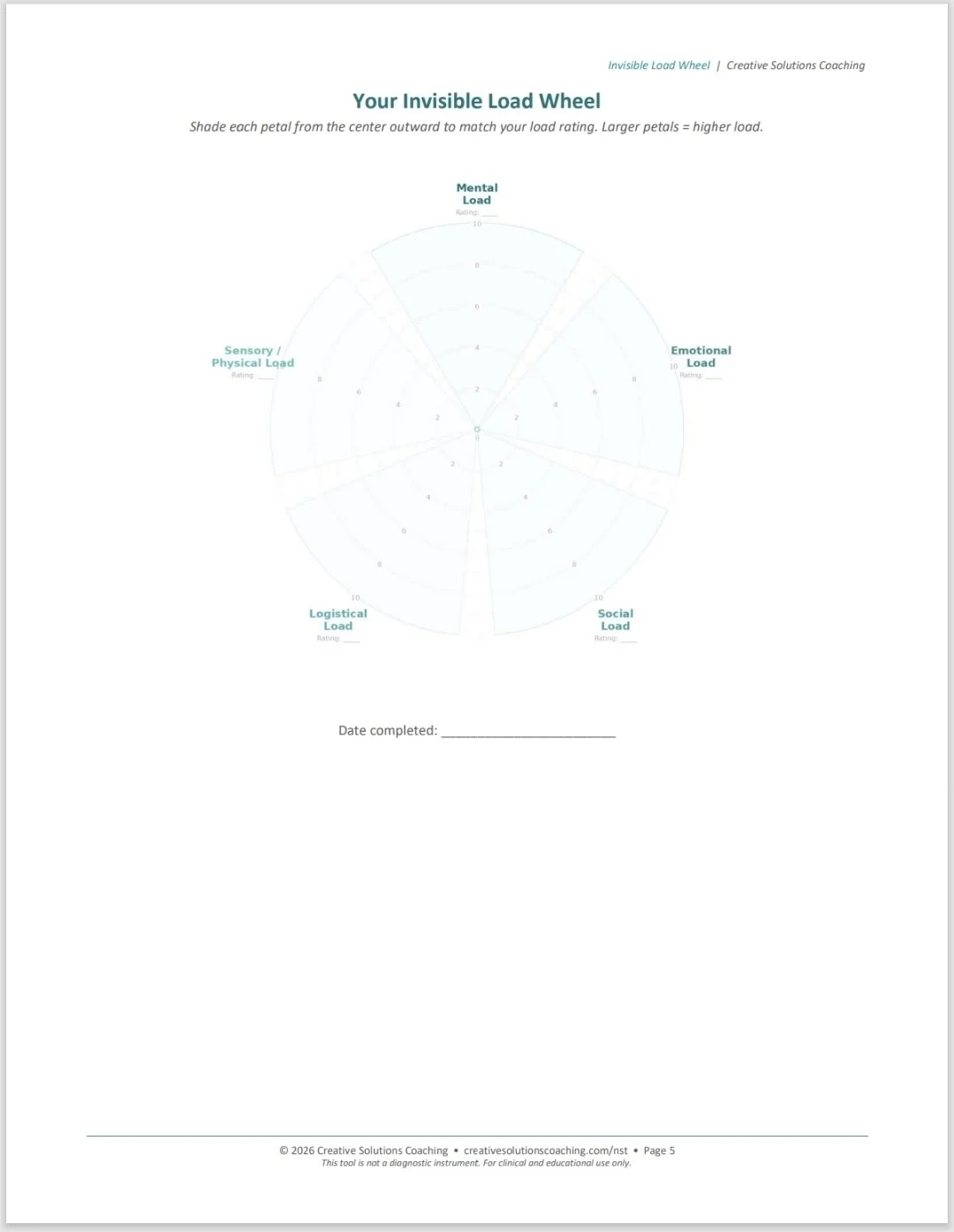 Image 3 of 4
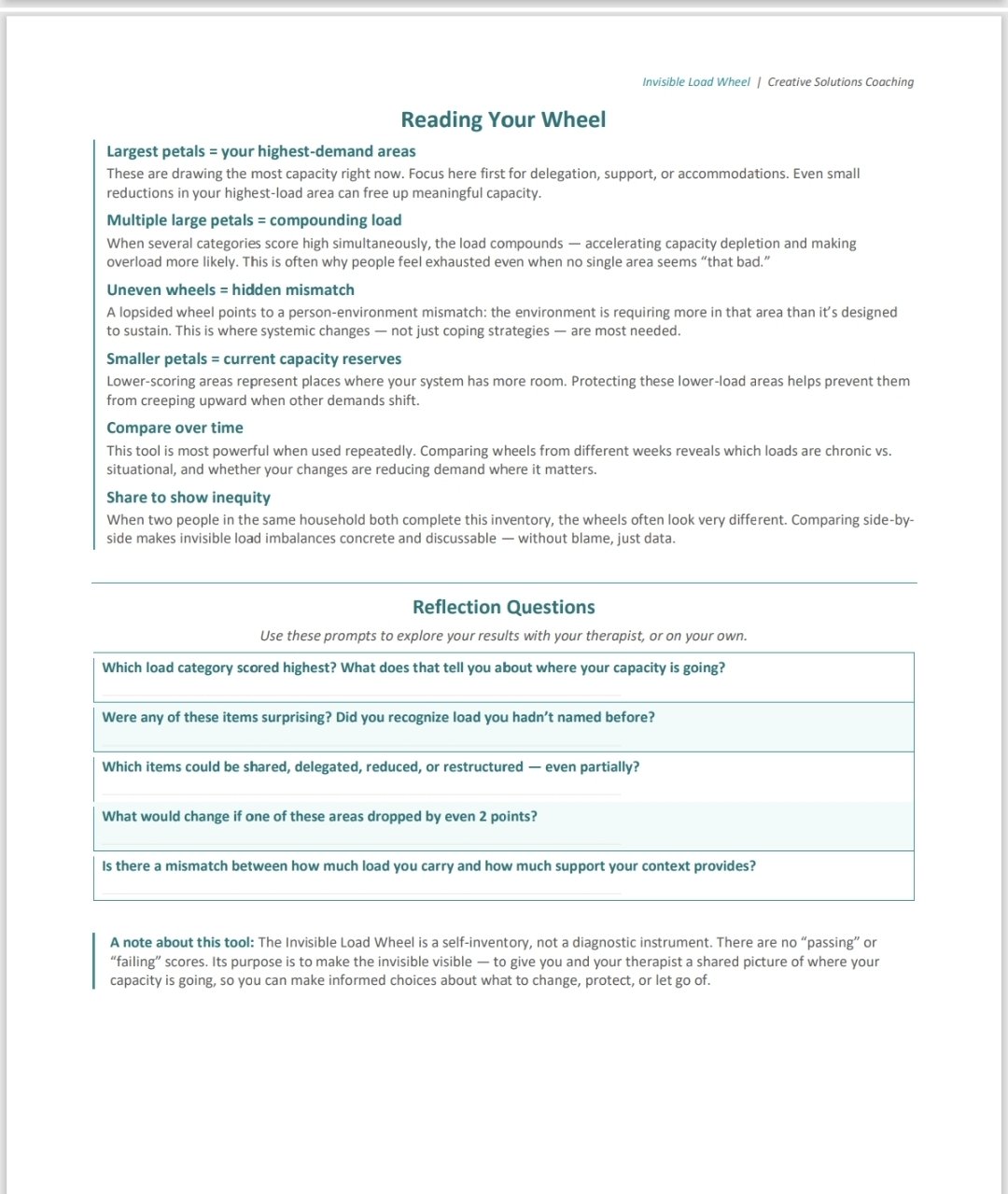 Image 4 of 4